Showing posts with label racial themes. Show all posts

Saturday, December 28, 2013

Review: My Sister Lives on the Mantelpiece by Annabel Pitcher

This was possibly the best book I’ve read in years. I rarely give a “5 Star” status but didn't even have to think about it. There were many reasons for me NOT to like this book. It’s contemporary fiction (I’m drawn to fantasy). It’s about “depressing” subjects, it’s akin to a “problem novel,” which I tend to find forced with see-through agendas taking on too many issues. But I loved this book. It wasn’t forced, it was genuine. Not depressing, but uplifting.

When children ask questions, and adults won't or can’t answer, they are left to make their own assumptions about life. Ten-year-old Jamie has a lot of questions and the first person narration captures his observations.

His older sister, Rose (a twin), died five years before the novel begins in a London terrorist attack. Jamie can hardly remember Rose, but his family has fallen apart because of the loss. His father harbors fear and hate for Muslims and holds onto his grief, forcing it onto others. His mother has checked out and left the family. His older sister, Jas, does her best to make sure Jamie knows he is cared for.

What shined was Jamie’s relationship with his classmate and best friend, Sunya, who wears a hijab to school. Though this relationship is a risk for Jamie (how furious would his father be if he knew?), it is Sunya who strengthens Jamie’s spirit when he is at his lowest. She sticks up for him, plays into his fascination with superheros and even calls Jamie out when he acts like a fair-weather friend.

Jamie’s belief that things can get better and that friendship is important carry this book. He loves his family despite their glaring problems and takes action, doing the best a 10-year-old can, to make things better. I laughed and I cried in no small part to Annabel Pitcher’s writing but also because of David Tennant’s amazing narration. Just fantastic.

The mantelpiece, the hearth, is supposed to be the center of home which conjures feelings of warmth and belonging, love and security. But in Jamie’s home, his dead sister lives on the mantelpiece and her ghostly presence looms large, scattering all positive emotions. But with help from Sunya and Jas, Jamie finds a way to make his presence known and remind a family what it means to be family. 

Though targeted at middle-grade readers, I'd recommend this book to anybody. Anybody! <3

Publisher: Findaway World, 2012     Length: 6 hours
Rating: 5 Stars     Source: Public Library

Tuesday, October 15, 2013

Review: The Language Inside by Holly Thompson


Holly Thompson’s The Language Inside did everything I’ve been looking for in a novel in verse. Thompson is clearly a poet not just a writer. The words are deliberately chosen for their meaning and beauty, and their ability to evoke a thoughtful response in the reader.

After reading the summary I was skeptical. There were so many different issues the novel takes up. Emma is a teen raised in Japan. When she moves back to the U.S. because her mother has breast cancer, Emma volunteers at a long-term care center. There, Emma helps Zena, a patient with locked-in syndrome, write poems. She also meets Cambodian refugees and makes new friends all the while suffering from migraines. Eventually she must choose: stay in the U.S. or return to Japan. So, ya, a lot going on! But Thompson weaves the story seamlessly and believably. Having recently read Patricia McCormick’s Never Fall Down I was happy to stumble upon more that would give me a glimpse about the Khmer Rouge.

I liked Emma and her story but I enjoyed the poetic form. It wasn’t a gimmick to snag “reluctant readers” (though I would still recommend this book to one). This is a story not only made of poems but also about poetry as Zena and Emma write together. I’ve been on the hunt for high-quality novels in verse and am happy to add The Language Inside to my list.

Publisher: Delacorte, 2013     Pages: 528
Rating: 4 Stars     Source: Public Library

Sunday, March 31, 2013

Review: Superman Versus the Ku Klux Klan by Rick Bowers

Rick Bowers weaves two seemingly disconnected histories, the creation and immense popularity of Superman with the long and disturbing history of the Ku Klux Klan, to produce a surprising story of how the entertainment industry promoted social justice. The two narratives are brought together when the the Adventures of Superman radio show uses its national popularity to combat the pervasive influence of the KKK in its 1946 “Clan of the Fiery Cross” episodes. 

Bowers provides a brief but insightful history of the KKK, its beginning after the Civil War, and cycle of influence in the U.S. Alternating chapters discuss the modest beginnings of Superman and his rise from comic book to radio show to T.V. and the silver screen. Though not a deep exploration of either subject I learned a lot about both. And so did the teens who read this book in my discussion group.

My book group teens were surprised by the long history and real power the KKK exercised. They also enjoyed the chapters about Superman and how a couple of teenagers were responsible for his creation. In book discussion, we listened to the first episode of the “Clan of the Fiery Cross” (below) and laughed at the Kellogg’s cereal commercials as well as the out-of-date insults used by the teens. They found it hard to believe that millions of kids tuned into this show just because it sounds so cheesy to us today.

Many reviews I’ve read recommend this book for late elementary and middle school readers. Both my teens and I strongly disagreed. This is a great book for high school students and I recommend it for a history class. Bowers shows the significance of using primary sources when doing research as he debunks myths about the broadcast’s use of KKK code words (which Wikipedia still says is true!). The text is dry. I wanted to learn about the subject but it was often simply boring. The original photographs opening each chapter offered little relief. When I asked my teens who would enjoy this book they said: Anyone really interested in Superman or general U.S. history. When asked what age it was for they said: high school students and adults. They were shocked anyone would recommend this to younger students or to reluctant readers. I would add that this is a good choice for a teen who doesn’t care for fiction.

Overall, this is a thumbs up. I learned a lot. My book group teens did, too. We had a great discussion about primary versus secondary sources. We also made a pro con list of who was the better superhero: Superman or Batman. It was an enthusiastic debate.


Publisher: National Geographic Society, 2012     Pages: 160
Rating: 3.5 Stars     Source: Public Library
Full Title: Superman Versus The Ku Klux Klan: The True Story of How the Iconic Superhero Battled the Men of Hate

Saturday, January 26, 2013

Review: Jasper Jones by Craig Silvey

Imagine you are peacefully reading in your bed on a hot summer night when someone shouts your name through the open window next to you. Charlie is greeted by Jasper Jones, a fellow classmate and known troublemaker, in such a manner. Jasper pleads with Charlie for his help with a terrible situation, an experience which plunges Charlie from childhood to adulthood.

It took me awhile to realize the novel was not set in present times. I used the novel for a book discussion with teens and none of them quite realized that Jasper Jones is set during the Vietnam War. The war is mostly in the background but it ignites the already smoldering racism in Charlie's town.

Silvey vividly describes of the Australian bush as Charlie and Jasper romp around looking for answers. Everything in the novel felt intense. The opening scene (whoa!), the summer heat, the abundant growth -- Silvey writes with an intensity that reflects what being a teenager is like as they experience their “first” this and that.

The allusions to classic literature were fun but totally lost on my teen readers. Being a fan of both the movie and book versions of Capote’s Breakfast at Tiffany’s, I enjoyed Eliza’s character who mimics Holly Golightly by frequently quoting her. There are great references to To  Kill a Mockingbird and other texts which might be considered “southern gothic” which is the feel of Jasper Jones.

Silvey’s writing is definitely literary, taking its time to develop the characters, and the plot moved at what felt like a snails pace. The novel was a hundred pages too long and many of my teens just couldn’t finish it even though they liked the story. This is definitely a thumbs up and a good read but be prepared for less of a suspenseful thriller (as the opening scene suggests) and more of a contemplation of growing up and becoming an adult.

Publisher: Ember, 2012    Pages: 320
Rating: 3 Stars        Source: purchased copy

Wednesday, May 30, 2012

Review: Toning the Sweep by Angela Johnson

I am surprised I liked this book. Toning the Sweep is a non-plot driven story. Not a whole lot happens. It focuses more on character development and relationships than the rising action/climax/ resolution of a traditional story arch. Yet, I loved the characters. They felt real. Johnson presents common ground between reader and character which made it easy to empathize which, in my opinion, is one of the most important reasons to read -- to learn about people and see ourselves in their shoes for a moment.

Emmie has always enjoyed visiting her grandmother Ola in the California desert. But, when Emmie and her mother visit Ola now, they know it is for the last time. Ola has cancer and they have come to pack Ola's things and say goodbye. It is a soul-searching experience for Emmie (14) who strives to understand her care-free grandmother and her care-worn mother.

What could have been a sad and depressing story turned out to be an uplifting read. Reading Toning the Sweep felt like watching an incredibly pivotal moment in a family's life on T.V. -- like I was given an insightful snapshot. Emmie documents her grandma's life with a video camera and so the reader sees much of the story through Emmie's camera lens -- a perspective that I enjoyed and worked well in revealing Emmie's concerns.

Ola is a great character. Her eccentric behavior is a testament to her independent spirit but also her flawed character. Has Ola run away to the desert to hide from the past? Her strength carved out a great life there but at a cost to her daughter's well being. Emmie pieces these things together, uncovering more about her mother and grandmother's relationship, as she helps pack Ola's household, sorting the "keep", "donate" and "throw aways" of a lifetime.

David is Emmie's friend who she sees when visiting Ola. One of the few males in the story, David's character is important. He is exploring his Native American past, embracing it as a part of who he is, and helps Emmie think about her African American heritage.

No character in this story is superfluous. Each character adds something important in showing Emmie who her family is and who she is. For a little book, Toning the Sweep packs a big punch. It is a touching story about how life's tragedies effect people so deeply and how people can touch others deeply as well. It is about family and about inter-generational relationships between women. Johnson's writing blended metaphor and symbolism seamlessly, enhancing but never detracting from the story. This book counts towards the POC Reading Challenge!

Publisher: Scholastic, 1994     Pages: 112
Rating: 4 Stars     Source: borrowed from my teacher     

Sunday, March 25, 2012

Review: The Firefly Letters by Margarita Engle

Set in Cuba, The Firefly Letters weaves together four voices: Fredrika the foreign traveler, Cecilia the wealthy daughter of the house, Elana the slave girl and Beni, Elana’s husband. It is interesting to watch the dynamics of power between characters and the social structures of Cuba. Those we assume have power are often powerless in certain situations. All the voices represent someone who is or has been enslaved. The idea of freedom is explored. Elana remarks that she is jealous of Elana, a slave, because Elana is free to explore the countryside with Fredrika while she, Cecilia, is not allowed to venture out. Yet, Elana is forced to labor when and where her master commands. The story ends with a struggle wherein the characters work together to find their own freedom.

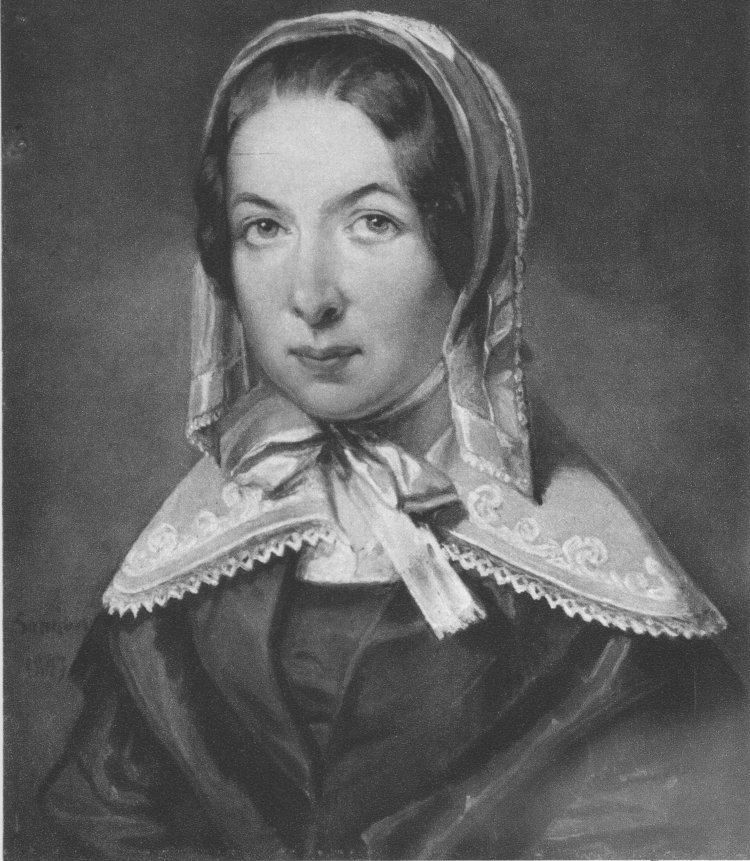
Fredrika Bremer was a Swedish writer and feminist who visited Cuba in 1851. As part of the aristocracy, her position was a privileged one though not necessarily a happy one as she was often forced to stay indoors and deliberately malnourished to have a “feminine” ballerina-like form. Groomed to be a wife for the aristocracy, Bremer never married but filled her life by writing, traveling and working to help the less fortunate.

As a piece of historical fiction, The Firefly Letters shines. But like fireflies, the illumination is brief as this is a short novel in verse. I found the story interesting but would have liked a longer narrative with a chance for deeper character development. I felt Cecilia's transformation was quick and so rather unlikely. However, the four voices offer distinct and insightful perspectives on freedom and Engle captures Cuba’s landscape to great effect. The Firefly Letters won the Pura Belpré Honor in 2011. This book counts towards the POC Reading Challenge!

Publisher: Henry Holt, 2010     Pages: 160     Full Title: The Firefly Letters: A Suffragette's Journey to Cuba     Rating: 3 Stars     Source: Public Library

Saturday, March 10, 2012

Review: Glory Be by Augusta Scattergood

It's the summer of 1964 in Hanging Moss, Mississippi and things are a changin'.

Town Council Man, James Smith, is against desegregation. So, he shuts down the community pool “for repairs.”

Glory’s birthday is the Fourth of July and she’s always had her party at the community pool...until this year. She unknowingly enters the fray as she outspokenly denounces the decision to close the pool.

Laura Lampert’s a Yankee whose mother is starting a freedom clinic in Hanging Moss. Friends are few for a white girl who drinks from the “coloreds only” drinking fountain.

Frankie Smith is caught between his family’s hatred and his friends’ readiness for change. Bullied into doing what’s wrong separates Frankie from his friends all summer.

Miss Bloom, Hanging Moss Librarian, refuses to be bullied and invites the entire town, black and white, to a celebration at the library. 

Emma is more than Glory’s family’s maid. She’s a “freedom fighter” who shelters activists at her home and bravely attends the library’s celebration as one of the few African Americans who do. 

Glory Be has be likened to The Help and I think it’s a good analogy though the two are different in presentation. In The Help, readers see events through many characters’ eyes with each chapter presenting a different character’s point of view. In Glory Be it is Glory’s voice that is the strongest and the book is written from her point of view. The strength in Glory’s point of view is that readers get a distinct feel for what is was like for a white child to participate in the Civil Rights Movement in the South. The other characters are shown how a child would understand them. Adults’ actions are often confusing to Glory and in her innocence she attempts to set them straight. Slowly, Glory begins to understand the implications of what’s going on around her. 

The story goes beyond the Civil Rights Movement and explores a young girl growing up. The relationship between Glory and her teenage sister, Jesslyn, is in flux and I enjoyed watching that relationship change. Their father is a reverend who is somewhat distant as he deals with professional duties. Emma is a stand-in mother to the girls but not there all day. Glory has learned to turn to her sister for support and friendship but now her sister is distancing herself from Glory, desiring more privacy and "grown-up" activities. 

Change is hard -- even good change. Glory Be was an enjoyable story about friendship and family during the Civil Rights Movement. Though I wished Emma’s voice had been louder this is ultimately a story about a white child’s experience and perspective and one well worth reading. This book counts towards the POC Reading Challenge!

Publisher: Scholastic Press, 2012     Pages: 202
Rating: 4 Stars     Source: Free Uncorrected Proof  (paperback)

Thursday, February 9, 2012

Review: Inside Out and Back Again by Thanhha Lai

Ha is ten when war comes to her home. She and her family leave Saigon on the last ship fleeing the city. Even after they land in the U.S. Ha, her  mother and brothers still feel adrift in a new and often hostile culture.

Inside Out and Back Again addresses war (in Vietnam), immigration, racism, bullying and family with simple verse. In each poem, Ha tells about her day, what went wrong and what went right. She talks about what it's like to learn a new language and what it's like to leave one's home not by choice but by necessity.

One feature that stood out for me was how simple cultural misunderstandings were dealt with by various characters. Some were willing to laugh and learn together while other characters let prejudice fuel cruel actions and prevent learning. Another interesting character interaction (or lack thereof) was between Ha and her teacher who seemed completely unequipped and uninterested in learning about Ha's situation and how best to help her feel comfortable and to learn.

Lai's book of free verse is told narratively, like a story, from Ha's perspective. So, don't let the poetry factor get in your way of reading this significant story which, Lai tells us at the end, is partially based off her personal experience. I tend to be critical of issue-oriented fiction and Inside and Back Again certainly is such a book; yet, I enjoyed it for it's rich description of setting and emotion and for the plain fact that it had a good story to tell. This book counts towards the POC Reading Challenge!


The above video is Lai reading her book. My favorite poem begins at 2:53!

Publisher: Scholastic, 2012     Pages: approximately 200
Rating: 4 Stars     Source: borrowed from my teacher =)

Wednesday, July 27, 2011

Review: In Stitches by Anthony Youn, M.D.

Tony was raised to be a doctor. His parents would except nothing less. Growing up as one of two Asian-American kids in a small town wasn't easy. Neither was medical school. In Stitches is a lighthearted memoir about Tony's progression from awkward child to confident doctor. 

The first of five parts covers Youn's premed years: birth-college. He recounts many failed attempts at gaining a girlfriend. The rejections begin piling up. Like most kids, he struggles with his looks and as his jaw juts out it sabotages his lustful ambitions. The text focuses on his attempts to score and until he finds a steady girlfriend the story is more about chasing skirts than becoming a doctor. About a third of the way through, once Youn finds said girl, the text focused much more on his medical school days which was what kept my attention. For all the emphasis on finding a girlfriend I would have liked a bit more about their relationship. We really don't know anything about her.

Things get dicey and interesting in part 4, "Third Year," where Youn recounts the "highlights" of clinical rotations. He encounters interns from hell, detached cool-as-a-cucumber doctors, horrible trauma and quirky surgeons. Tony is drawn to plastic surgery and ends his last year in school working with plastic surgeons around the country. 

Youn tells the story as one looking back, who's breathed a sigh of relief that those grueling years of med school are behind him. One can only imagine what a current medical student might write -- a whoa-is-me type of journal. But Youn's memoir is light and funny. This text counts towards to the POC Reading Challenge!

Publisher: Gallery Books, 2011     Pages: 271     Written with Alan Eisenstock
Rating: 3.5 Stars     Source: Won from Crazy-for-Books. Thanks, Jen!

Friday, May 13, 2011

Review: The History of Mary Prince: A West Indian Slave, Related by Herself edited by Moira Ferguson

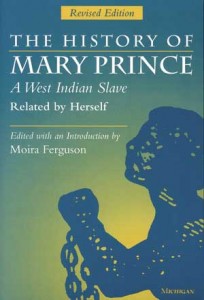
Mary Prince was born a slave in Bermuda (a British colony) around 1788. She became the first black women to escape to England (blacks were “free” as long as they stayed on English soil) and this account about her journey from slavery to freedom is as fascinating and inspiring as it is horrifying.

The History of Mary Prince is a rich narrative, in the genre of slave narratives, which is focused on enlightening readers on the brutal nature of slavery. Along the way, Mary’s narrative gives interesting accounts of salt harvesting in the West Indies, the politics of both the anti- and pro-slavery moments, and the precarious role of black women in the 19th century. Mary’s narrative is multi-layered. Since she could not write, Mary’s story was transcribed by another women. Mary’s editor, Mr. Pringle, was also the secretary for the Anti-slavery society and Mary’s employer in whose house she lived. With this knowledge, gaps arise in The History, little idiosyncrasies that appear to be censored or altered in some way that will make Mary’s story palatable to its intended audience.

The marginalia make The History absolutely fascinating. Moira Ferguson’s excellent introduction sheds light on English and West Indian politics that influenced Mary, her many owners and the the making of her narrative. Also, Pringle’s short preface and lengthy supplement prove the intensity of the anti-slavery campaign. In the appendix, Ferguson includes copies of newspaper articles of two court cases surrounding The History and other contemporary events which influenced the abolition of slavery in the West Indies in 1833. 

Those interested in slave narratives should put The History of Mary Prince at the top of their list. Also, those interested in the making of history through narrativity, autobiographies, black women narratives and British history will appreciate this text. This book counts towards the POC Reading Challenge!

Publisher: University of Michigan Press, 1997     Pages: 173
Rating: 5 Stars     Source: Purchased Copy

Saturday, May 7, 2011

Review: Claudette Colvin: Twice Toward Justice by Phillip M. Hoose

The Montgomery Bus Boycott of 1955 protested racial segregation. You probably remember Rosa Parks who refused to give up her seat on the bus, BUT did know it was a 15-year-old girl who started it all? A year before Rosa took her now famous seat, Claudette Colvin, acting entirely on her own and fed up with racial segregation, refused to move for a white passenger. Claudette was drug off the bus while shouting "It's my constitutional right!" She was jailed that night and eventually testified "as a key plaintiff in Browder v. Gayle, the landmark case that struck down the segregation laws of Montgomery and swept away the legal underpinnings of the Jim Crow South.

The structure of this book is amazing and to take full advantage of it I highly recommend reading the hardback. The photographs are in black and white and several take up full pages. They give readers a glimpse into how racial segregation affected lives in the South. There are several photos of Claudette and her family, too. Separated from the main text are black boxes offering extra information that the reader can choose to skip over, continuing with the story, or stop to read to learn more about issues and people introduced in the text.

Claudette's bravery, her struggle for justice, once on the bus and again in court, as a teenager no less, is inspiring as much as it is informational. Claudette's story is an excellent choice for middle schoolers, or anyone, looking to learn about the Civil Rights Movement and how one person really can make a difference.

Publisher: Farrar, Strause and Giroux, 2009     Pages: 144
Rating: 4.5 Stars     Source: Purchased Copy

Wednesday, April 6, 2011

Review: Ruth and the Green Book by Calvin Alexander Ramsey

Ruth and the Green Book shows how racial segregation affected an average African American family. When Ruth's dad buys a car the family decides to drive from Chicago to Alabama to visit her grandma. There were few places the Jim Crow laws didn't reach and the "open road" was no exception. Many hotels, restaurants and service stations refused to serve Ruth's family. After eating and sleeping in the car, Ruth's excitement about her vacation is tainted with worry and fatigue.

A friendly traveler gives Ruth's family a copy of The Negro Motorist Green Book. Published by Victor H. Green from 1936-'64, The Green Book listed gas stations, barber shops and homes of those willing to give African American travelers a place to rest, eat a good meal and fix up their cars between destinations. Ruth enjoys picking out  "Tourist Homes" from the book. Cooper's illustrations capture the scenic countryside and intimate family dynamics as Ruth's family travels to grandma's house.

If you are interested in The Green Book you can view a full 1949 edition in PDF here. It's a lot of fun to look up your state and see the names of people and businesses from a town near you that accommodated traveling families like Ruth's during the Jim Crow era. Ruth and the Green Book is a touching story great for early elementary students. Listen to a podcast with illustrator Floyd Cooper here. This book counts towards the POC Reading Challenge!

Publisher: Carolrhoda Books, 2010     Pages: 32    
Illustrator: Floyd Cooper     Source: Public Library
Rating: 3.5 Stars

Friday, April 1, 2011

Review: We Are the Ship: The Story of Negro League Baseball by Kadir Nelson

If you like history, sports or awesome art then you need to read We Are the Ship by Kadir Nelson. It turns out "America's favorite pastime" has a complex and fascinating history.

The players in the Negro League lived for baseball. Conditions weren't always great for these ball players, and sometimes conditions were terrible, but they knew they were doing something important.    

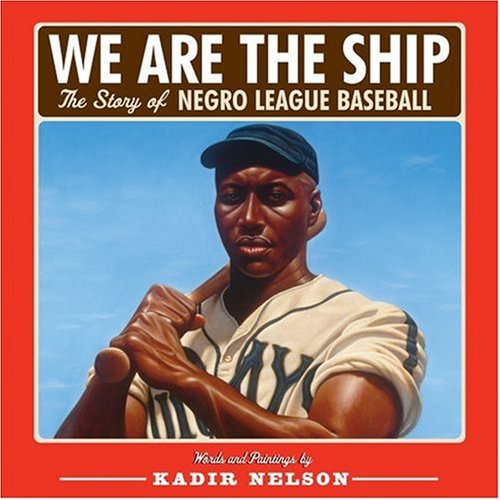
Nelson's oil paintings are fantastic. Several reminded me of trading cards with players striking a pose. Some show the team on the road and others catch players in action swinging the bat or pitching the ball.

The book immerses the reader in baseball. Each chapter is an "inning" building suspense to the end of the League's history. The book also immerses readers in the history of racial segregation and shows how these men wouldn't let anything stop them from playing ball - their way.
Summary: "Using an 'Everyman' player as his narrator, Kadir Nelson tells the story of Negro League baseball from its beginnings in the 1920s through its decline after Jackie Robinson crossed over to the majors in 1947. The voice is so authentic... But what makes this book so outstanding are the dozens of full-page and double- page oil paintings--breathtaking in their perspectives, rich in emotion, and created with understanding and affection for these lost heroes of our national game."

While I found this book in the kids section the narrator is compelling and has an adult voice. Baseball enthusiasts of any age will appreciate this amazing true story.  This book counts towards the POC Reading Challenge! For more information visit the book's website!

Publisher: Hyperion Book, 2008      Pages: 96
Rating: 4 Stars      Source: Public Library
Friday, March 25, 2011

Review: American Born Chinese by Gene Luen Yang

In American Born Chinese three tales are woven together, contributing to one overarching theme. Unlike a traditional short story collection, in which a story can be read at random, Yang’s short story cycle works best when the tales are read chronologically. Each story builds on the last story’s theme or lesson. Yang uses three characters to explore the construction of identity.

Opening the cycle is the Chinese folktale of The Monkey King. Yang’s adaptation of this “journey to the west” myth is hilarious and surprising. The Monkey King works hard mastering Kung Fu and wants to be recognized as an equal among other deities. Alas, his superiors are not impressed and The Monkey King undergoes many trials before realizing who he is and who he wants to be. The second story introduces Jin Wang, the son of Chinese immigrants, living in California and combating stereotypes as he tries to fit in, make friends and woo an all-American girl at high school. Chin-Kee visits his cousin Danny every year. Danny is horrified to be seen with Chin-Kee who exhibits extremely stereotypical Chinese behaviors.

Adaptation is a major theme connecting each story. The characters realize they must adapt to the culture already established. Each character struggles to adapt while deciding whether or not to embrace his own cultural heritage. Eventually, they take control of their identity but not before making a few mistakes. The text explores what it means to be a nation of immigrants and how the American identity is continuously forged. The three tales are linked in a surprising way which is slowly revealed.

When reading a short story the reader must look for information left off the page. Similarly, graphic novel readers must interpret the narrative when the full story is not supplied in text. In other words, you can’t skip over the pictures without losing significant parts of the narrative. This is true of American Born Chinese. The words and pictures complement each other. American Born Chinese leans heavily on its comic roots. Yang uses onomatopoeia with words like “SMACK” and “WHUMP” creating a fun sensorial reading experience.

Yang manages to bring humor and tenderness to a serious subject. While the format is sure to draw reluctant readers I would not hesitate to hand American Born Chinese to any teen reader. It has a little something for everyone.  Yang speaks about A.B.C. in the video found below!

Publisher: First Second, 2006     Pages: 233   
Rating: 4 Stars     Source: IC Public Library
This text counts towards the POC Reading Challenge!

Saturday, February 26, 2011

Review: Bad News for Outlaws by Vaunda Micheaux Nelson

This book was awesome! Gun fights, chases, escapes! Indians, cowboys and slaves. Hardship, justice and honor. It’s the Wild West folks and this is the true story of a slave who became a U.S. deputy Marshal. His name is Reeves. Bass Reeves. And he is Bad News for Outlaws!

This is nonfiction done right. I loved the art work (looks like oil paintings) and the story was fascinating. Both totally captured the spirit of the old West. Many of the text blocks look like they are printed on yellowed paper. The font looks Western, too, big and bold. R. Gregory Christie’s illustrations capture the emotion of each moment being described. Bass’ gaze is piercing. There’s no messing with that man. 

This is well researched book and it shows. There are many amazing anecdotes pieced together from historical records. There are extra resources in the back including a glossary of Western terms used in the book, a timeline, a further reading list and much more.

I was completely captivated with Bass’ story. Although it’s aimed at 2nd-5th grade readers, if you know anyone who enjoys all things Western I urge you to put this book in their hands. This title counts towards the POC Reading Challenge! Well, this was a hard review to write. I just wanted to use the word "awesome" over and over! 

Publisher: Carolrhoda, 2009     Pages: 40     Illustrator: R. Gregory Christie
Full Title: Bad News for Outlaws: The Remarkable Life of Bass Reeves, Deputy U.S. Marshal
Rating: 5 Stars     Source: IC Public Library

Tuesday, February 22, 2011

Review: Exposure by Mal Peet

When I picked up Exposure at the library I internally groaned and several fears cropped up before I got past the book jacket blurb. First of all, it has sports in it and I don’t “do” sports. And not just any sport but soccer (yeah, I'm American =) of which I know nothing about. Then I made the connection to Shakespeare’s Othello and worried about having not read the play. Then there was a celeb chick on the cover in a strappy dress and dangly earrings. 

Exposure was nothing I expected and I thoroughly enjoyed it. At every chapter I expected the themes to shallow or the prose to deteriorate. The prose was excellent throughout. The themes were dealt with realistically despite the unusual and extravagant lifestyles of the characters. Celebrity is an unusual phenomenon, especially when popular individuals do not seek fame or do nothing particularly excellent to warrant huge fan bases. The novel explores the phenomenon of fame and how people come into it and how they deal with it. Dezi and Otello seemed like real people coping as best they could in situations they never expected to be in.
Summary:"This is the third "Paul Faustino" novel by multi-award-winning Mal Peet. A massive soccer star has it all, but someone is plotting his downfall...Revered as a national hero...married to the desirable Desmerelda...cherished by the media...soccer star, Otello, has it all. But a sensational club transfer sparks a media frenzy, and when he is wrongly implicated in a scandal, the footballer's life turns into a tragic spiral of destruction. South America's top sports journalist, Paul Faustino, witnesses the power of the media in making and breaking people's lives." "

Teenagers, much like Bianca (a teenage street rat), become enamored with celebrities. They look up to these fashionable trend setters with expensive toys who appear to have the world at their fingertips. With reality T.V. we do get a glimpse at some celebrities’ lives. But we know that they know we are watching and that they are being paid to perform a role that may or may not be who they are. Exposure shows a negative reality that accompanies fame which is often masked or overlooked in the media. By changing perspectives in the novel, seeing celebrities through the eyes of several characters from different walks of life, Peet shows the three dimensional lives of the rich and famous and the many people affected by their fame.

There are so many aspects of this book – the racial issues, the class divides, the consuming quest for success, balancing family relationships and literary comparisons – that make Exposure one I want teens to read. Luckily, I won’t feel like I’m pushing an “issue” book. Exposure is a mix of mystery, pop culture and foreign culture which was interesting to me. Being fun to read is the icing on the cake. There is great substance to the story but I still had fun reading it. Actually, I think Exposure is an excellent adult read, too. I'm looking forward to reading more by Peet!

This title counts towards the POC Reading Challenge!
Publisher: Candlewick, 2009     Pages: 448
Rating: 5 Stars     Source: IC Public Library

Tuesday, February 15, 2011

Review: One Crazy Summer by Rita Williams-Garcia

Imagine this is you: Eleven years old. Alone. In charge of two younger sisters. A girl. African American. 1968. Flying for the first time on an airplane. Meeting your mother years after she’s abandoned you – who still ignores you while you stay in her house.

This is Delphine’s life. Her father is crazy for shipping her and her sisters across the country to spend their summer in Oakland with her crazy mother. Delphine and her sisters attend a summer school run by the Blank Panthers. Things get crazy as Delphine finds herself drawn into a world she fears could lead to trouble.

Delphine narrates One Crazy Summer in an immensely introspective voice. It surprised me. I loved her, and I loved her sisters Vonetta and Fern. I loved how they stuck together and how Delphine looked out for them. I even loved their fights (that poor doll). But so much introspection makes me suggest this book is for advanced young readers or tweens. One Crazy Summer reminds me of a book adults want kids to read but kids find difficult to get through. There are a lot of historical figures and the writing utilizes dialect which slows the pace for me as a reader. I imagine some kids may have a similar experience. I think it will take the right kid to appreciate the narrative since there isn’t a whole lot of action. The action did pick up a bit in the last third and I felt rewarded for having made it through the slower parts. I enjoyed the conclusion and am glad I read the book.

This book counts towards the POC Reading Challenge.

Publisher: Amistad, 2010     Pages: 218
Rating: 3.5 stars     Source: IC Public Library

Tuesday, February 8, 2011

Review: The Dismissal of Miss Ruth Brown by Louise S. Robbins

History, what we know of the past, is often told by the victors. Having transcribed countless interviews, faithfully scoured dusty files and coils of microfilm, Louise S. Robbins forms a more complete account of Ruth Brown’s career as a librarian. The text is a scholarly endeavor to bring about a more accurate picture of a “perfect town” that wasn’t so perfect after all. It’s a true story about racism and about standing up for what you believe. About censorship and the public library’s role towards it at a critical time in American history.

An abbreviated summary: “In 1950 Ruth W. Brown, librarian at the Bartlesville Public Library, was dismissed from her job after thirty years of exemplary service, ostensibly because she had circulated subversive materials. In truth, however, Brown was fired because she was active in a group affiliated with the Congress of Racial Equality.”

If you are interested in the civil rights movement, information and library science, libraries generally, censorship or American history I definitely recommend this book to you. It is told like an elongated form of investigative journalism and tends to be fact heavy. What I most enjoyed about Ruth Brown’s personality was how, despite her appearance, she was anything but a stereotypical librarian (especially for her day).


Publisher: University of Oklahoma Press, 2001     Pages: 256
Rating: 3 Stars     Source: purchased

Monday, July 12, 2010

Review: The Lone Ranger and Tonto Fistfight in Heaven by Sherman Alexie

I’ve been waiting a few days to write my review for this book. It left me with an odd feeling that I’m still not quite sure how to translate into words. Did I like it, how did it make me feel, what did I learn? I’ve been asking myself these questions but Alexie doesn’t make them easy for me to answer. There’s a lot to digest.

The Lone Ranger and Tonto Fistfight in Heaven is a short story collection by Native American author Sherman Alexie. The text revolves around several characters living around the Spokane Indian Reservation but focuses primarily on Victor, Thomas and Norma. There are several themes explored in the text but the main thrust seems to be a quest to present what it means to be Native American in the 20th century (the text was published in 1993).

My first and lingering impression of this text is that it marks Alexie’s early writing career. There’s a lot of angst coming through the words. It seems as if he had much to express, much that he wanted the world to hear and there’s fingers pointing every which way which left me feeling dizzy. And it comes across rather loud and in your face. I think Alexie’s later works reflect similar messages but with a lot more skill. That isn’t to say this work isn’t skillful. No, Alexie’s got skill by the bucket loads. Rather, his later works show a honed skill.

These stories are powerful in their representation of Indian life. There’s a lot of conflict – between father and son, between urban and reservation Indians, between white culture and reservation culture. Alexie confronts the stereotype of alcoholic Indians. I thought it was interesting how Victor is shown before he begins drinking as full of promise and hope and after he begins drinking his hopefulness and positive outlook disappears. Most of the men on the reservation succumb to alcohol. Victor and his friends seem to lose their cultural identity when they become alcoholic, or in other words, they take on a new cultural identity – one that feeds stereotypes and doesn’t reflect Native American traditions. In one story, Victor is involved in a car accident and the white authorities are shocked he isn’t drunk. It is the small victories like these that offer hope.

I’m still not sure how to answer my initial questions. It was a worthwhile read. I recommend it to people interested in or unfamiliar with Native American life, cultural studies or a general interest in anthropology. 
Publisher: Harper, 1994    Pages: 223   
Rating: 3.5 Stars                 Source: used bookstore.

Wednesday, May 5, 2010

The Help by Kathryn Stockett

By now, what has not been said about this number one, top selling novel? That’s more of a statement than a question. I doubt I can say anything that hasn’t been said before. My hope is that if you haven’t read The Help you’ll beg it off your friend, get in the hold line at your library or break down and purchase it because why? Because it is worth it. I know some people have a few complaints that run along the lines of: the ending was anti-climatic or the dialect bothered them. Some more serious complaints are that it’s just one more bash on Mississippi. Even if you finish and wonder what all the fuss is about I promise you won’t be disappointed that you read it.

I wasn’t sure what this book was about when I decided to buy it. I knew it was set in the Southern U.S. during the 1960s and there was something about a lot of women afraid to follow after whatever it was they wanted. And that there would be racial issues thrown in there. This is a terrible summary. However, not knowing what I was in for left me deliciously and delightfully surprised. I didn’t expect to become engrossed by a maid’s daily life. I didn’t expect to laugh out loud on several occasions. I didn’t expect to learn and this novel enlightened me about how complicated the civil rights movement was for many different (but not so different) people.

This book was a pleasure to read. As a rule, I don’t mind dialect but I find it slows my pace down. Truly though, I savored every page. The story alternates between three women’s point of view: one young white woman, one middle-aged black maid and one not-quite-old black maid. I adored all the voices but Aibileen’s (the eldest’s) was my favorite. There is so much tension, anxiety and fear in these women’s lives because of their desire to tell the truth. I felt nervous for them and kept hoping they’d find a way to iron out the wrinkles (hehe. Aibileen hates ironing pleats). I feel this book is a must read for those living in the U.S., perhaps especially my 20-something generation who have grown up in a different era and have little understanding of what daily life was like in the South during the 1960s.

So, I have this great thing called a public library. And mine hosted the author, Kathryn Stockett, who stopped by on her way to the Windy City to speak, read and sign our books! Hearing her speak was a blast. If you have the opportunity to see her, do it! She spoke a bit about her anxieties being a white woman writing in the voice of black women. Stockett had a black maid growing up and this book is her way of expressing many of the things she has learned about what life was like for the help. In case you’re curious, she said two of her favorite authors are Lee Smith and Kaye Gibbons (among many others). She has an awesome southern accent! And in response to a question said that no, she is not Skeeter (the young white protagonist), that she was never as brave as Skeeter or able to ask those kinds of difficult questions when she was a child. I think she was rather brave to write this story, though. Ms. Stockett was gracious enough to let me take my picture with her so, there we are. Now, go get yourself a copy of The Help and settle in for a good read.
Publisher: Amy Einhorn Books, 2009     Pages: 451
Rating: 5 Stars                                             Source: Purchased on Amazon