Showing posts with label Future of books. Show all posts

Saturday, February 11, 2012

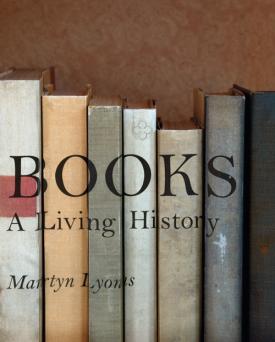
Review: Books: A Living History by Martyn Lyons


Attention Book Lovers! Are you interested in the creation of “the book?” Are you curious about its future at a time when ebooks are gaining popularity? In this fascinating and wonderfully illustrated tome, Martyn Lyons chronicles the development and status of the book.

More than a tribute to the codex (what we recognize as a book with two covers, a spine and paper in between), Lyons looks at how books have come into being -- the reasons people  bothered to write things down, how books were treated and the technological changes that made new formats possible. He covers ancient texts like cuneiform tablets and Chinese bamboo books to the rise of modern publishing houses, genres, the mass marketing of books and finally ebooks.

Lyons creates a flowing account of the book’s history that is easily digested. The photographs of artifacts, rare books, paintings and people that appear on nearly every page make a rich and visually appealing reading experience. If you would like to be a book aficionado as well as book lover then may I suggest Books: A Living History.

Publisher: Getty, 2011     Pages: 224
Rating: 5 Stars     Source: purchased copy

Wednesday, November 24, 2010

The Saga of Print vs. Digital Continued

In an earlier post I wrote about the alleged end of books. In this post I’ll explore a few reasons why I think digital media are not ready to replace print. Whenever I hear someone say, “People love books. Books will be around forever!” I think that’s a true but over-enthusiastic and simplistic statement. But when I hear others say, “We don’t need these books anymore. Everything should be online! Get rid of these expensive books and the library housing them!” I think that’s someone who a) probably doesn’t read many books and b) does not understand the complexity of digital documents.

Yet it is a relevant question. Do we continue pouring millions of (taxpayer) dollars into libraries – the building, the staff, the PRINT materials – when our world is rapidly changing into an online global community?

Yes.

The U.S. Census Bureau reported that in 2009, over 68% of American households have Internet access at home. While that is awesome, what about the other 32% who need to use materials? That’s a few million people we’re talking about. Many libraries restrict the amount of time you get on a computer. If you can’t get your research done in 30 minutes, sorry bucko. This is why print materials are important. They can be taken home for days, weeks and months at a time – for free. No batteries, no technology needed to view a document. Free.

Ok, so what about research libraries. Most of their patrons are highly educated and have easier access to the Internet. So access is not a major problem. Currency is a major issue. Medical researchers need the newest information so they make the best possible decisions for their patients. You wouldn’t want your doctor using books from 20 years ago would you? So, what do we do with all these outdated books? Do we house them for the rare individual doing historical research? They are few, these historical researchers, but a significant minority and important.

Should we take all the old books and digitize them? The old books would be available online/ in a digital format for historical researchers and we could save money by shutting down the book housing facility. But there’s a small problem. It is not possible in the foreseeable future to digitize every book. It takes massive amounts of man power to digitize a collection. It just isn’t feasible right now. Think about the Google Books project. It’s slow going and they must choose what they think are the most important books – they can’t get everything. If we rely on an initiative like Google Books (as cool as it may be) we will lose information from the past. That’s a little scary.

There are issues even Google can’t get around when it comes to making traditionally print materials available in digital format. That’s copyright. It’s enough to make your head spin. Copyright issues alone are enough to hinder universal online access.

Here's the biggest reason I don’t think digital resources are ready to be the next King of Text. There is as yet no way to guarantee that digital resources will be around next week let alone forever.  Preservation issues have haunted the physical book for hundreds of years. We’ve literally had centuries to learn how to preserve paper. But preserving bit streams, those ones and zeros that make up your computer’s memory, how on earth do we save those? It’s not as simple as copy and paste.

Hardware mediums change approximately every 5 years. How likely are you to buy an 8-track, a cassette or a floppy disk? Software is updated constantly. Switching from one hardware/software to another, called migration, is fraught with digital dangers. Documents can become unreadable in part or whole. Eek! Now, obviously companies manage to function with this “acceptable loss” of information. But should we trust all our information to digital repositories with these issues unresolved?

Let’s talk about subscriptions. I subscribe to Better Homes and Gardens. I pay for it, it arrives and I can read it for as long as the pages hold together. Libraries pay huge bucks, thousands of dollars, to subscribe to digital journals they do not get physical copies of. Ok, so what. They don’t want the physical copies because space is an issue. But ownership is an issue. The vendor providing the subscription can go out of business, change its policies or the library can decide it can’t afford the service anymore. All those journals the library paid for go poof! They don’t have a copy anymore. When you buy physical copies you get the text forever (or the life of the paper on which it’s printed). When you buy digital you don’t always get copies so information is lost when a subscription is canceled. This happens. And it’s another reason that digital documents aren’t ready to take over planet Earth.

There are initiatives going on to solve these problems. LOCKSS (lots of copies keep stuff safe) is based at Stanford University Libraries and tries to deal with the subscription issue. It’s a step in the right direction. But for now, print is our only guarantee that information will remain available for years to come. I believe digital issues will be solved (some distant day) and that print will take the back seat. But until then, the book is needed and should be valued and given space in our facilities.

Saturday, November 13, 2010

"The End of Books" by Octave Uzanne: A Short Story Saturday Feature

There's been speculation that the physical book as we know it is on its way out. What with Kindles, audio books and the plethora of articles online, sometimes it feels like print could disappear and the world would still function. This is an issue my classmates and I have been discussing and it hits a tender nerve with me. Honestly, I think it's going to be a long time before digital resources could be in the position to trump print. I have my reasons which we'll begin to explore today and more so in my next post.

This man started it all. Johannes Gutenberg's movable type press, invented in 1439, lead the way to the mass production of books that we revel in today. Many thanks Johannes! Print's role as King of Text has been challenged for quite some time. The print vs. digital saga we're experiencing now is just another skirmish in an ongoing battle for textual dominance. Would it surprise you to to know that people have been thinking about this issue for over a hundred years?

Octave Uzanne  (1851-1931) was a French bibliophile, author, journalist and book snob extraordinaire (see link for photos of his lavish books). If you're a book lover or intrigued by the print vs. digital issue, I think you will enjoy this short story.

I give you "The End of Books."

My Reactions: 
I was surprised at how accurate some of Uzanne’s predictions were. Of course, the phonograph with wax cylinders did not last long. But the idea for audio books is there which I found interesting. However, Uzanne pokes fun at the idea of audio books. He suggests people can’t be bothered to strain their eyes to read (or they’re just too lazy to read) so they listen to books instead. What do you all think of this idea? Do audio books offer the exact same experience that reading a book does? I’ve often wondered about this (hmm… maybe I should research this topic!). What is the same? What is different?

New media brings new possibilities and challenges. Edison’s phonograph made recording audio possible. Uzanne envisions authors becoming narrators and since anybody can talk anybody can record – good writers or not! Surely the quality of self-published material will be far inferior to anything recognized by peers and published by a respectable publishing house. Right? Or, no? What about blogging? Isn’t it the same concept – anybody can publish whether they’re good at creating content or not. Unlike Uzanne, I’ve never bemoaned this fact. I find it exciting that more and more people can reach a greater audience though self-publishing efforts. Good content will, in time, find more readers and the not-so-good content will find less readers. Marketing strategies aside, I think it’s that simple.

What I agree/disagree on with Uzanne:
  • Agree: Other forms of textual media will rise that will become popular (like audio books and e-readers) but they will not utterly replace the book. 
  • Agree: The mass production of books means many will be created that are not meant to last.
  • Disagree: The mass production of anything less than “literature” of the highest quality will lead to the doom of man’s intelligence! Smart people are naturally drawn to nerdy, smart things and won’t stop because someone wrote, and they read, a subpar book (example: I read and relatively enjoyed Twilight. No, my brain has not quit working).
  • Agree: Print is a large, integral part of our industry and will not be snuffed out in only a few years because new media emerged. Even though bookstores have been closing (we are in a recession after all), book publishers are hanging in there and still produce large numbers of physical books.
  • Agree: The aesthetic experience of holding and reading a book cannot be duplicated. Either it’s paper or it isn’t.
  • Disagree: Author as publisher means too much bad literature! Author as publisher means more good literature (that might never have surfaced under other circumstances).
For all Uzanne’s foresight he does not envision the complicated digital world we live in today. My posts live online (via the server who stores them for me) and in a document file on my computer. I have no physical copies. Will Blogger store my blog posts for the next 10 years, my lifetime, forever? What if my computer crashes and I lose all my documents? What about online articles and ebooks?

Keep an eye out for "The Saga of Print vs. Digital Continued." Today’s post scratched the surface of why digital resources are not ready to act as King of Text. In my follow up post I’ll discuss exactly why digital media are not yet trustworthy enough to store all of planet Earth’s information as well as ongoing efforts to remedy this issue.

This has been a Short Story Saturday feature. Happy reading!

Thursday, February 25, 2010

On the Future of Books: Physical vs Digital Format

I thought I'd share Mr. Scalzi's ideas on the digital book phenomenon. But first, my comments. Many bookaholics, such as myself, are skeptical of the digital books via iphones, kindles, sony readers, etc. I honestly don't think I'd ever buy one for the simple fact that I wouldn't be able to share and loan books with friends not to mention I like having the physical books. Here's what I think should become of books in the future: As with vinyls anymore and many DVDs, when you buy a book you should get a digital copy, something you can download onto a reader of your choice. This nonsense of only having one format or another is silly becuase when you purchase the title you own it for your personal use. If I want Amy Tan on my PC/reader and on my bookshelf I should get to for one purchase price. I want my cake and I want to eat it, too.
http://whatever.scalzi.com/2010/02/25/this-manuscript-hires-people/
http://whatever.scalzi.com/2010/02/25/handing-you-off-to-charlie-stross-today/