Showing posts with label Slavery. Show all posts

Monday, April 2, 2012

Review: Best Shot in the West by Patricia C. McKissack and Fredrick L. McKissack, Jr.

Nat Love, or “Deadwood Dick,” was among the greatest cowboys who ever lived. Daring and dangerous when he needed to be, Nat was a natural at breaking broncs and shooting straight. A freed slave from Tennessee, Nat journeyed west to find work that rewarded his abilities.

A graphic novel, Best Shot in the West, is a dramatized version of Nat’s story mostly adapted from his autobiography. Is this fiction or nonfiction? Nat was a real cowboy. But the author’s note explains they dramatized certain scenes for the sake of the story’s flow. The inside cover describes the book as historical fiction while the Library of Congress subject heading inside says “Biography.” My library has it under Biography as well. It may be that the availability of factual materials on Nat and legends and myths about him make it difficult to create a totally factual story of Nat’s life. Ultimately, I am unsure but still enjoyed the story.

Like comic books, the story and illustrations are broken into panels with speech bubbles and blocks. Illustrator DuBurke’s paintings are muted but dramatically portray cattle stampedes and shootouts. The backgrounds are colorful while people and objects in the foreground are greyish. It’s an interesting technique but sometimes I wanted a clearer picture of people’s faces.

So, we all know that Hollywood tends to skew reality and Wild West films are no exception. But the exact ways that movies skew things may allude us...we know things are inaccurate but we’re not sure how exactly. This is the second book I’ve read about men from the Wild West and they were both African American and had amazing life stories, legends of their time, and  worthy of movies of their own. I would totally watch a movie about Nat Love. While reasons for Indian/Cowboy conflict are alluded to, especially when Nat is captured by an unusual tribe, adults may need to point out the complexities of why Indians conducted raids and why they captured Nat (instead of killing him) as the story is focused only on Nat’s perspective as a loyal cowboy.

Best Shot in the West is a story for kids interested in cowboys, horses, outlaws and crack shots. I recommend this story since it provides an important perspective on what it took to be a cowboy and what type of people cowboys were. This book counts towards the POC Reading Challenge!

Publisher: Chronicle Books, 2012     Pages: 133     
Full Title: Best Shot in the West: The Adventures of Nat Love
Illustrator: Randy DuBurke
Rating: 3.5 Stars     Source: Public Library

Sunday, March 25, 2012

Review: The Firefly Letters by Margarita Engle

Set in Cuba, The Firefly Letters weaves together four voices: Fredrika the foreign traveler, Cecilia the wealthy daughter of the house, Elana the slave girl and Beni, Elana’s husband. It is interesting to watch the dynamics of power between characters and the social structures of Cuba. Those we assume have power are often powerless in certain situations. All the voices represent someone who is or has been enslaved. The idea of freedom is explored. Elana remarks that she is jealous of Elana, a slave, because Elana is free to explore the countryside with Fredrika while she, Cecilia, is not allowed to venture out. Yet, Elana is forced to labor when and where her master commands. The story ends with a struggle wherein the characters work together to find their own freedom.

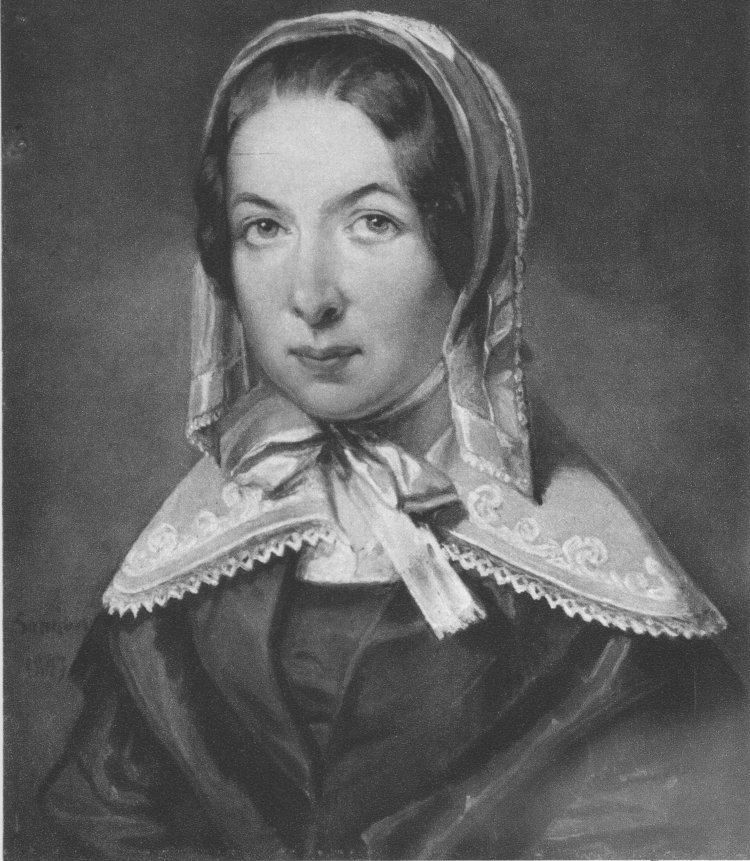
Fredrika Bremer was a Swedish writer and feminist who visited Cuba in 1851. As part of the aristocracy, her position was a privileged one though not necessarily a happy one as she was often forced to stay indoors and deliberately malnourished to have a “feminine” ballerina-like form. Groomed to be a wife for the aristocracy, Bremer never married but filled her life by writing, traveling and working to help the less fortunate.

As a piece of historical fiction, The Firefly Letters shines. But like fireflies, the illumination is brief as this is a short novel in verse. I found the story interesting but would have liked a longer narrative with a chance for deeper character development. I felt Cecilia's transformation was quick and so rather unlikely. However, the four voices offer distinct and insightful perspectives on freedom and Engle captures Cuba’s landscape to great effect. The Firefly Letters won the Pura Belpré Honor in 2011. This book counts towards the POC Reading Challenge!

Publisher: Henry Holt, 2010     Pages: 160     Full Title: The Firefly Letters: A Suffragette's Journey to Cuba     Rating: 3 Stars     Source: Public Library

Friday, May 13, 2011

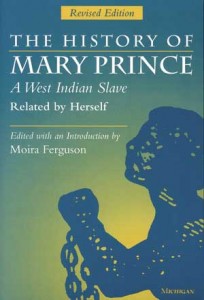
Review: The History of Mary Prince: A West Indian Slave, Related by Herself edited by Moira Ferguson

Mary Prince was born a slave in Bermuda (a British colony) around 1788. She became the first black women to escape to England (blacks were “free” as long as they stayed on English soil) and this account about her journey from slavery to freedom is as fascinating and inspiring as it is horrifying.

The History of Mary Prince is a rich narrative, in the genre of slave narratives, which is focused on enlightening readers on the brutal nature of slavery. Along the way, Mary’s narrative gives interesting accounts of salt harvesting in the West Indies, the politics of both the anti- and pro-slavery moments, and the precarious role of black women in the 19th century. Mary’s narrative is multi-layered. Since she could not write, Mary’s story was transcribed by another women. Mary’s editor, Mr. Pringle, was also the secretary for the Anti-slavery society and Mary’s employer in whose house she lived. With this knowledge, gaps arise in The History, little idiosyncrasies that appear to be censored or altered in some way that will make Mary’s story palatable to its intended audience.

The marginalia make The History absolutely fascinating. Moira Ferguson’s excellent introduction sheds light on English and West Indian politics that influenced Mary, her many owners and the the making of her narrative. Also, Pringle’s short preface and lengthy supplement prove the intensity of the anti-slavery campaign. In the appendix, Ferguson includes copies of newspaper articles of two court cases surrounding The History and other contemporary events which influenced the abolition of slavery in the West Indies in 1833. 

Those interested in slave narratives should put The History of Mary Prince at the top of their list. Also, those interested in the making of history through narrativity, autobiographies, black women narratives and British history will appreciate this text. This book counts towards the POC Reading Challenge!

Publisher: University of Michigan Press, 1997     Pages: 173
Rating: 5 Stars     Source: Purchased Copy