Nat Love, or “Deadwood Dick,” was among the greatest cowboys who ever lived. Daring and dangerous when he needed to be, Nat was a natural at breaking broncs and shooting straight. A freed slave from Tennessee, Nat journeyed west to find work that rewarded his abilities.
A graphic novel, Best Shot in the West, is a dramatized version of Nat’s story mostly adapted from his autobiography. Is this fiction or nonfiction? Nat was a real cowboy. But the author’s note explains they dramatized certain scenes for the sake of the story’s flow. The inside cover describes the book as historical fiction while the Library of Congress subject heading inside says “Biography.” My library has it under Biography as well. It may be that the availability of factual materials on Nat and legends and myths about him make it difficult to create a totally factual story of Nat’s life. Ultimately, I am unsure but still enjoyed the story.
Like comic books, the story and illustrations are broken into panels with speech bubbles and blocks. Illustrator DuBurke’s paintings are muted but dramatically portray cattle stampedes and shootouts. The backgrounds are colorful while people and objects in the foreground are greyish. It’s an interesting technique but sometimes I wanted a clearer picture of people’s faces.
So, we all know that Hollywood tends to skew reality and Wild West films are no exception. But the exact ways that movies skew things may allude us...we know things are inaccurate but we’re not sure how exactly. This is the second book I’ve read about men from the Wild West and they were both African American and had amazing life stories, legends of their time, and worthy of movies of their own. I would totally watch a movie about Nat Love. While reasons for Indian/Cowboy conflict are alluded to, especially when Nat is captured by an unusual tribe, adults may need to point out the complexities of why Indians conducted raids and why they captured Nat (instead of killing him) as the story is focused only on Nat’s perspective as a loyal cowboy.
Best Shot in the West is a story for kids interested in cowboys, horses, outlaws and crack shots. I recommend this story since it provides an important perspective on what it took to be a cowboy and what type of people cowboys were. This book counts towards the POC Reading Challenge!
Publisher: Chronicle Books, 2012 Pages: 133
Full Title: Best Shot in the West: The Adventures of Nat Love
Illustrator: Randy DuBurke
Rating: 3.5 Stars Source: Public Library
Monday, April 2, 2012
Thursday, March 29, 2012
Review: Moon Over Manifest by Clare Vanderpool
Stories. Every day we tell each other stories. We read them, listen to them and share them with others. Stories take many forms: people “catching up,” movies and T.V. shows, music, video games, dirty footprints in the house and, of course, books. Rich in its layers, Moon Over Manifest shows how we are our histories and all our stories are connected.
Can you ever really understand a person or even a place until you know its story?
Abilene and her father, Gideon, lived the life of hobos, hopping on and off trains until he found work. But now Abilene is too old to be drifting. So, Gideon sends Abilene to stay in Manifest, Kansas with people he knew long ago...
Abilene is looking for stories: a hidden box, with letters and trinkets, reveals a story central to who the townspeople of Manifest are; the story of the Ratler, an unknown townsperson acting as a spy, that Abilene and her friends try to reveal; Miss Sadie the diviner has stories to tell if only someone will listen. Abilene knows these stories are important but the story she most wants to hear is the story of her father who once lived in Manifest. What kind of person is her father? Why did he send her away to live with strangers? Is he coming back for her?
Moon Over Manifest reminds me of the movie Fried Green Tomatos (one of my all-time favorites) in a couple ways. Like the movie, the story is set in the Depression Area. Moon Over Manifest also shifts between the past (in the letters and through Miss Sadie’s stories) and the present as (Abilene narrates her experience in Manifest). The flashbacks take us to the town of Manifest during World War One while Abilene’s story takes place in Manifest during the 1930s. This switching technique worked well and I loved the flashbacks.
Stories are central to the human experience. We can’t always remember raw facts and data. But we can remember stories. They evoke emotion, sympathy and empathy. Stories explain the facts and help us make sense of them. Stories help us remember and help us share memories. Remember when dad did.... Remember when your sister... We’ve all heard stories like these, haven’t we? Stories bind us together and so we tell them over and over.
Stories connect people and I think that’s what Moon Over Manifest shows. No matter how different the townspeople are, no matter their country of origin, their wealth or social class, age or gender, everyone's stories are connected.
While marketed as a children’s book, Moon Over Manifest is nuanced and Vanderpool is an excellent writer. The prose is enjoyable as are the many characters. Adults as well as children will appreciate this work. I highly recommend it!
Publisher: Yearling, 2011 (paperback copy) Pages: 351
Rating: 5 Stars Source: purchased copy
Sunday, March 25, 2012
Review: The Firefly Letters by Margarita Engle
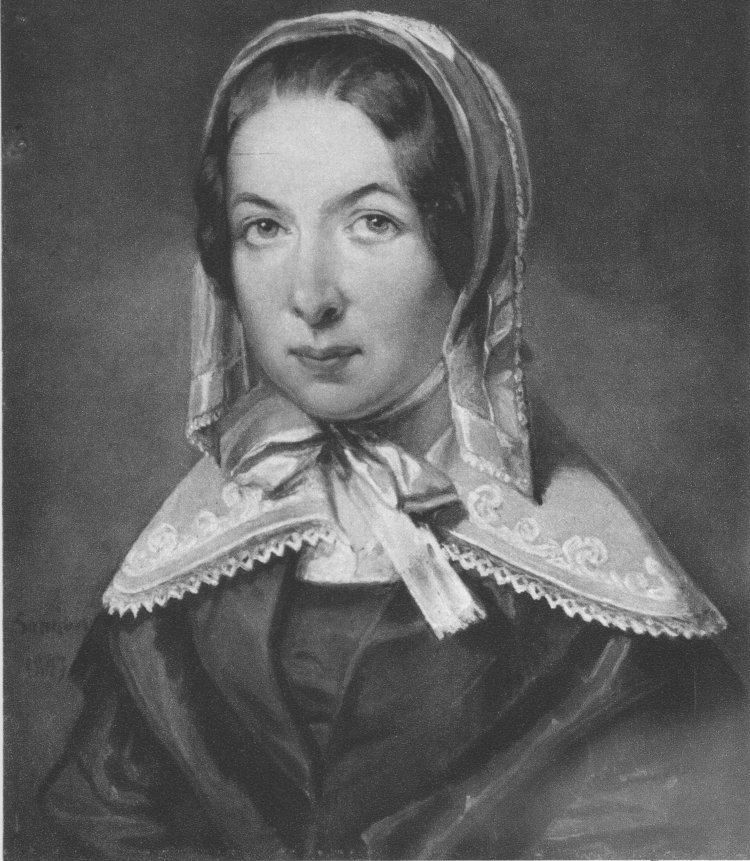
Set in Cuba, The Firefly Letters weaves together four voices: Fredrika the foreign traveler, Cecilia the wealthy daughter of the house, Elana the slave girl and Beni, Elana’s husband. It is interesting to watch the dynamics of power between characters and the social structures of Cuba. Those we assume have power are often powerless in certain situations. All the voices represent someone who is or has been enslaved. The idea of freedom is explored. Elana remarks that she is jealous of Elana, a slave, because Elana is free to explore the countryside with Fredrika while she, Cecilia, is not allowed to venture out. Yet, Elana is forced to labor when and where her master commands. The story ends with a struggle wherein the characters work together to find their own freedom.Fredrika Bremer was a Swedish writer and feminist who visited Cuba in 1851. As part of the aristocracy, her position was a privileged one though not necessarily a happy one as she was often forced to stay indoors and deliberately malnourished to have a “feminine” ballerina-like form. Groomed to be a wife for the aristocracy, Bremer never married but filled her life by writing, traveling and working to help the less fortunate.
As a piece of historical fiction, The Firefly Letters shines. But like fireflies, the illumination is brief as this is a short novel in verse. I found the story interesting but would have liked a longer narrative with a chance for deeper character development. I felt Cecilia's transformation was quick and so rather unlikely. However, the four voices offer distinct and insightful perspectives on freedom and Engle captures Cuba’s landscape to great effect. The Firefly Letters won the Pura Belpré Honor in 2011. This book counts towards the POC Reading Challenge!
Publisher: Henry Holt, 2010 Pages: 160 Full Title: The Firefly Letters: A Suffragette's Journey to Cuba Rating: 3 Stars Source: Public Library
Saturday, March 10, 2012
Review: Glory Be by Augusta Scattergood
It's the summer of 1964 in Hanging Moss, Mississippi and things are a changin'.
Town Council Man, James Smith, is against desegregation. So, he shuts down the community pool “for repairs.”
Glory’s birthday is the Fourth of July and she’s always had her party at the community pool...until this year. She unknowingly enters the fray as she outspokenly denounces the decision to close the pool.
Laura Lampert’s a Yankee whose mother is starting a freedom clinic in Hanging Moss. Friends are few for a white girl who drinks from the “coloreds only” drinking fountain.
Frankie Smith is caught between his family’s hatred and his friends’ readiness for change. Bullied into doing what’s wrong separates Frankie from his friends all summer.
Miss Bloom, Hanging Moss Librarian, refuses to be bullied and invites the entire town, black and white, to a celebration at the library.
Emma is more than Glory’s family’s maid. She’s a “freedom fighter” who shelters activists at her home and bravely attends the library’s celebration as one of the few African Americans who do.
Glory Be has be likened to The Help and I think it’s a good analogy though the two are different in presentation. In The Help, readers see events through many characters’ eyes with each chapter presenting a different character’s point of view. In Glory Be it is Glory’s voice that is the strongest and the book is written from her point of view. The strength in Glory’s point of view is that readers get a distinct feel for what is was like for a white child to participate in the Civil Rights Movement in the South. The other characters are shown how a child would understand them. Adults’ actions are often confusing to Glory and in her innocence she attempts to set them straight. Slowly, Glory begins to understand the implications of what’s going on around her.
The story goes beyond the Civil Rights Movement and explores a young girl growing up. The relationship between Glory and her teenage sister, Jesslyn, is in flux and I enjoyed watching that relationship change. Their father is a reverend who is somewhat distant as he deals with professional duties. Emma is a stand-in mother to the girls but not there all day. Glory has learned to turn to her sister for support and friendship but now her sister is distancing herself from Glory, desiring more privacy and "grown-up" activities.
Change is hard -- even good change. Glory Be was an enjoyable story about friendship and family during the Civil Rights Movement. Though I wished Emma’s voice had been louder this is ultimately a story about a white child’s experience and perspective and one well worth reading. This book counts towards the POC Reading Challenge!
Publisher: Scholastic Press, 2012 Pages: 202
Rating: 4 Stars Source: Free Uncorrected Proof (paperback)
Tuesday, March 6, 2012
Review: Mockingbird by Kathryn Erskine
I am going to exercise my freedom of speech and declare I did not like this novel. Largely, this is due to personal taste which I will attempt to explain. I feel like this is a book people feel inclined to praise and disinclined to criticize because of it’s subject matter and seal of approval from the National Book Foundation. However, I am at a loss to understand why this book won the National Book Award (2010). I mean no disrespect to the author whose intentions with the book are clearly and admirably stated in the author's note. I just didn't like her book and this is, as always, my honest and subjective opinion.
While looking at the National Book Award’s description page it is incredibly vague as to guidelines for choosing finalists and winners: “They [the judges] may arrive at these choices using whatever criteria they deem appropriate, as long as they do not conflict with the official Award guidelines.” Those guidelines being that the book is by an American author and that the entrance fee was paid. Yet, the award is known for choosing “high” literature which brings into question the criteria for being literature. That may be another discussion but it’s unavoidable for me when thinking about Mockingbird. Does a book's well-timed and admirable theme determine if it's literature? I should hope it is only one factor among many equally important factors.
For me, the dominant theme was Caitlyn’s Asberger’s Syndrome and it’s sub theme, school violence (a shooting). It was all too much. A school shooting which killed the sibling of young child with Asperger’s who is already motherless with a father lost in grief required too much willful suspension of disbelief for me. This is realistic fiction and I wanted more realism. I felt Erskine wanted to cover too many big and specific subjects and did the sub themes little justice.
The prose, the first person narrative, was at times plain and at others too forceful. I never felt moved only informed. I want literature to move me. And not just (attempt) to move me to tears. The text felt self-conscious. I felt Erskine’s intense and anxious desire to be respectful and literary (so many motifs beating me over the head) was thrust at me. I felt manipulated as a reader and that made me resistant to the novel. I felt blatantly asked to feel something that the novel could not naturally draw out.
While looking at the National Book Award’s description page it is incredibly vague as to guidelines for choosing finalists and winners: “They [the judges] may arrive at these choices using whatever criteria they deem appropriate, as long as they do not conflict with the official Award guidelines.” Those guidelines being that the book is by an American author and that the entrance fee was paid. Yet, the award is known for choosing “high” literature which brings into question the criteria for being literature. That may be another discussion but it’s unavoidable for me when thinking about Mockingbird. Does a book's well-timed and admirable theme determine if it's literature? I should hope it is only one factor among many equally important factors.
For me, the dominant theme was Caitlyn’s Asberger’s Syndrome and it’s sub theme, school violence (a shooting). It was all too much. A school shooting which killed the sibling of young child with Asperger’s who is already motherless with a father lost in grief required too much willful suspension of disbelief for me. This is realistic fiction and I wanted more realism. I felt Erskine wanted to cover too many big and specific subjects and did the sub themes little justice.
The prose, the first person narrative, was at times plain and at others too forceful. I never felt moved only informed. I want literature to move me. And not just (attempt) to move me to tears. The text felt self-conscious. I felt Erskine’s intense and anxious desire to be respectful and literary (so many motifs beating me over the head) was thrust at me. I felt manipulated as a reader and that made me resistant to the novel. I felt blatantly asked to feel something that the novel could not naturally draw out.
I appreciate what the novel attempts to do especially in regards to raising children’s awareness (and adults’) to the complexities of Asperger’s Syndrome. I feel if Erskine would have kept to this one subject and left the school shooting and motherlessness out of the picture (and saved for other books) this book would have worked better. There needed to be a better balance of theme, plot and prose. I hope the panel that chose this book as the award winner at least had a lengthy debate over it. It’s too bad the public isn't privy to that conversation. I truly feel that the choice of theme is what made this book win the medal. It's a popular medical topic and little addressed in children's literature. I am of the firm opinion, however, that choice of a popular serious subject matter or new subject matter should not carry so much weight when awarding prizes.
Mockingbird is bold in its scope and gravity of its subjects. It has been well received and praised, loved by many, and I am happy for those who've had a great reading experience. I just did not. Tell me, have you ever found yourself resistant to a novel? A time when you knew a book wanted a certain response from you as a reader that you just couldn't muster?
Publisher: Philomel Books/Penguin, 2010. Pages: 235
Rating: 2 Stars Source: Public Library
Sunday, February 12, 2012
In My Mailbox: Post Graduation Reading
It's certainly not the first time I've gotten books in the mail but it is my first time participating in IMM. I am getting closer to graduation and the anticipation cursed through my veins and prompted me to order books to read when I'm done. Here's what I got last week:
- Why Does E=mc2 (And Why Should We Care?) by Brian Cox and Jeff Forshaw
- An explanation of Einstein's famous equation. I enjoyed all my hard science classes and think I'll enjoy this book on relativity, gravity, mass, etc. It purports to be in layman terms. We'll see about that.
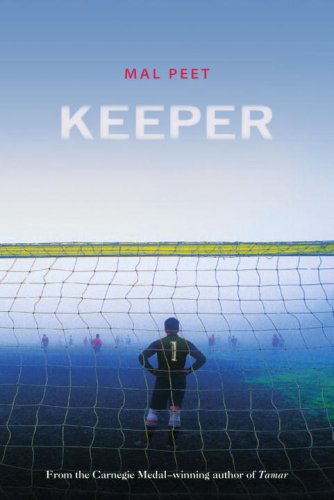
- Keeper by Mal Peet
- I was first introduced to Paul Faustino, sports reporter, in Exposure. He's an interesting character who's intrigued me despite my utter indifference to sports.
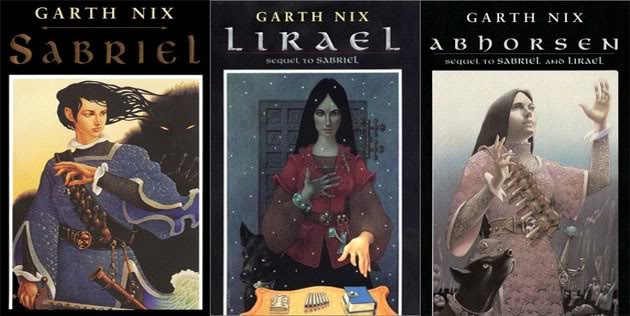
- The Abhorsen Trilogy paperback box set with Sabriel, Lirael and Abhorsen by Garth Nix.
- I've read the first two and they were instant favorites. I know I'll be reading them again and again. I began listening to Abhorsen but got busy. I'm looking forward to finishing the series after school!
Saturday, February 11, 2012
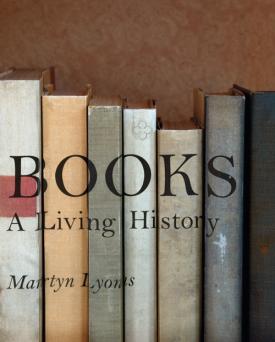
Review: Books: A Living History by Martyn Lyons
Attention Book Lovers! Are you interested in the creation of “the book?” Are you curious about its future at a time when ebooks are gaining popularity? In this fascinating and wonderfully illustrated tome, Martyn Lyons chronicles the development and status of the book.
More than a tribute to the codex (what we recognize as a book with two covers, a spine and paper in between), Lyons looks at how books have come into being -- the reasons people bothered to write things down, how books were treated and the technological changes that made new formats possible. He covers ancient texts like cuneiform tablets and Chinese bamboo books to the rise of modern publishing houses, genres, the mass marketing of books and finally ebooks.
Lyons creates a flowing account of the book’s history that is easily digested. The photographs of artifacts, rare books, paintings and people that appear on nearly every page make a rich and visually appealing reading experience. If you would like to be a book aficionado as well as book lover then may I suggest Books: A Living History.
Publisher: Getty, 2011 Pages: 224
Rating: 5 Stars Source: purchased copy
More than a tribute to the codex (what we recognize as a book with two covers, a spine and paper in between), Lyons looks at how books have come into being -- the reasons people bothered to write things down, how books were treated and the technological changes that made new formats possible. He covers ancient texts like cuneiform tablets and Chinese bamboo books to the rise of modern publishing houses, genres, the mass marketing of books and finally ebooks.
Lyons creates a flowing account of the book’s history that is easily digested. The photographs of artifacts, rare books, paintings and people that appear on nearly every page make a rich and visually appealing reading experience. If you would like to be a book aficionado as well as book lover then may I suggest Books: A Living History.
Publisher: Getty, 2011 Pages: 224
Rating: 5 Stars Source: purchased copy
Thursday, February 9, 2012
Review: Inside Out and Back Again by Thanhha Lai
Ha is ten when war comes to her home. She and her family leave Saigon on the last ship fleeing the city. Even after they land in the U.S. Ha, her mother and brothers still feel adrift in a new and often hostile culture.
Inside Out and Back Again addresses war (in Vietnam), immigration, racism, bullying and family with simple verse. In each poem, Ha tells about her day, what went wrong and what went right. She talks about what it's like to learn a new language and what it's like to leave one's home not by choice but by necessity.
One feature that stood out for me was how simple cultural misunderstandings were dealt with by various characters. Some were willing to laugh and learn together while other characters let prejudice fuel cruel actions and prevent learning. Another interesting character interaction (or lack thereof) was between Ha and her teacher who seemed completely unequipped and uninterested in learning about Ha's situation and how best to help her feel comfortable and to learn.
Lai's book of free verse is told narratively, like a story, from Ha's perspective. So, don't let the poetry factor get in your way of reading this significant story which, Lai tells us at the end, is partially based off her personal experience. I tend to be critical of issue-oriented fiction and Inside and Back Again certainly is such a book; yet, I enjoyed it for it's rich description of setting and emotion and for the plain fact that it had a good story to tell. This book counts towards the POC Reading Challenge!
The above video is Lai reading her book. My favorite poem begins at 2:53!
Publisher: Scholastic, 2012 Pages: approximately 200
Rating: 4 Stars Source: borrowed from my teacher =)
Inside Out and Back Again addresses war (in Vietnam), immigration, racism, bullying and family with simple verse. In each poem, Ha tells about her day, what went wrong and what went right. She talks about what it's like to learn a new language and what it's like to leave one's home not by choice but by necessity.
One feature that stood out for me was how simple cultural misunderstandings were dealt with by various characters. Some were willing to laugh and learn together while other characters let prejudice fuel cruel actions and prevent learning. Another interesting character interaction (or lack thereof) was between Ha and her teacher who seemed completely unequipped and uninterested in learning about Ha's situation and how best to help her feel comfortable and to learn.
Lai's book of free verse is told narratively, like a story, from Ha's perspective. So, don't let the poetry factor get in your way of reading this significant story which, Lai tells us at the end, is partially based off her personal experience. I tend to be critical of issue-oriented fiction and Inside and Back Again certainly is such a book; yet, I enjoyed it for it's rich description of setting and emotion and for the plain fact that it had a good story to tell. This book counts towards the POC Reading Challenge!
The above video is Lai reading her book. My favorite poem begins at 2:53!
Publisher: Scholastic, 2012 Pages: approximately 200
Rating: 4 Stars Source: borrowed from my teacher =)
Sunday, February 5, 2012
People of Color Reading Challenge 2012 Sign Up
This challenge was such fun and so interesting last year that I am participating again this year.
What it is: "Any book (by any author) with a main character that is a person of color qualifies for this reading challenge, as well as any book written by an author of color. The goal is to encourage readers [to] have a more diverse reading experience and to support diversity in the publishing industry by reading and reviewing books by or about persons of color."
Why I participate: Last year I was motivated to diversify my own reading. This year, I realize more how important it is to encourage our publishing industry to make books available about and written by people of color. As a would-be children's librarian, I've come to realize how few representations there are of people of color in children's books. We can encourage the publishing industry with our purchasing choices and by highlighting books by and about people of color on our blogs. I am signing up for level 5: 16-25 POC books.
POC Books I Plan/Hope to Read This Year:
Reviews added as I read.
Children's and YA Titles:
Adult Titles:
What it is: "Any book (by any author) with a main character that is a person of color qualifies for this reading challenge, as well as any book written by an author of color. The goal is to encourage readers [to] have a more diverse reading experience and to support diversity in the publishing industry by reading and reviewing books by or about persons of color."
Why I participate: Last year I was motivated to diversify my own reading. This year, I realize more how important it is to encourage our publishing industry to make books available about and written by people of color. As a would-be children's librarian, I've come to realize how few representations there are of people of color in children's books. We can encourage the publishing industry with our purchasing choices and by highlighting books by and about people of color on our blogs. I am signing up for level 5: 16-25 POC books.
POC Books I Plan/Hope to Read This Year:
Reviews added as I read.
Children's and YA Titles:
- Inside Out and Back Again by Thanhha Lai
- I Am Different: Can You Find Me? by Manjula Padmanabhan
- The Firefly Letters by Margarita Engle
- Toning the Sweep by Angela Johnson
- Little Owl's Night by Divya Srinivasan
- Glory Be by Augusta Scattergood
- The Friendship Matchmaker by Randa Abdel-Fattah
- A Girl Named Disaster by Nancy Farmer
- Blue Jasmine by Kashmira Sheth
- Saraswati's Way by Monika Schroder
- The Astonishing Life of Octavian Nothing by M.T. Anderson
- Best Shot in the West by Patricia C. McKissack and Fredrick L. McKissack, Jr.
- A Confusion of Princes by Garth Nix
- Nation by Terry Pratchett
Adult Titles:
- Sula by Toni Morrison
- The Toughest Indian in the World by Sherman Alexie
Subscribe to:
Posts (Atom)