Showing posts with label coming of age. Show all posts

Saturday, January 26, 2013

Review: Jasper Jones by Craig Silvey

Imagine you are peacefully reading in your bed on a hot summer night when someone shouts your name through the open window next to you. Charlie is greeted by Jasper Jones, a fellow classmate and known troublemaker, in such a manner. Jasper pleads with Charlie for his help with a terrible situation, an experience which plunges Charlie from childhood to adulthood.

It took me awhile to realize the novel was not set in present times. I used the novel for a book discussion with teens and none of them quite realized that Jasper Jones is set during the Vietnam War. The war is mostly in the background but it ignites the already smoldering racism in Charlie's town.

Silvey vividly describes of the Australian bush as Charlie and Jasper romp around looking for answers. Everything in the novel felt intense. The opening scene (whoa!), the summer heat, the abundant growth -- Silvey writes with an intensity that reflects what being a teenager is like as they experience their “first” this and that.

The allusions to classic literature were fun but totally lost on my teen readers. Being a fan of both the movie and book versions of Capote’s Breakfast at Tiffany’s, I enjoyed Eliza’s character who mimics Holly Golightly by frequently quoting her. There are great references to To  Kill a Mockingbird and other texts which might be considered “southern gothic” which is the feel of Jasper Jones.

Silvey’s writing is definitely literary, taking its time to develop the characters, and the plot moved at what felt like a snails pace. The novel was a hundred pages too long and many of my teens just couldn’t finish it even though they liked the story. This is definitely a thumbs up and a good read but be prepared for less of a suspenseful thriller (as the opening scene suggests) and more of a contemplation of growing up and becoming an adult.

Publisher: Ember, 2012    Pages: 320
Rating: 3 Stars        Source: purchased copy

Friday, September 21, 2012

Review: Nation by Terry Pratchett

The beginning of Nation gripped me. I loved the alternate-reality Victorian setting that’s introduced. The narrative quickly shifts to an alternate-reality Pacific island. Mau is on a quest to prove his manhood when the tsunami strikes and obliterates his village and the prim and proper Daphne is stranded on his island. I enjoyed Daphne’s sea voyage and the entire crash scene.

Together, Mau and Daphne rebuild the Nation as they overcome their fears of one another, take in refugees and learn to work with each other. The novel became increasingly introspective as Mau reconsiders all the old ways and worship of the old gods. As the new leader, he must decide how to direct his people and as truths are uncovered he learns that letting go of the past is not the same as disrespecting it.

My interest waned significantly in the middle. I just wasn’t interested in the story anymore and the underlying ideological message of questioning “the way things have always been done” and “the things we’ve always believed” was so transparent that I just got bored. However, the serious minded teen may enjoy this thought-provoking YA novel. This book counts towards the POC Reading Challenge!

Publisher: HarperCollins, 2009    Pages: 384
Rating: 3 Stars     Source: Public Library

Tuesday, June 12, 2012

Review: A Confusion of Princes by Garth Nix

Taken from his parents as a toddler, Khemri was groomed to be a Prince of the Empire -- a biologically, technologically and psychologically upgraded human, one of thousands who rule the Empire, governed only by the Imperial Mind. Having come of age, Khemri is elated to take a post as Prince. But the Empire is a more dangerous place than he was lead to believe and power and glory more elusive and less thrilling than he expected.

The book begins with a great hook: “I have died three times, and three times been reborn...” (1). Nix quickly introduces the technologically advanced world via Khemri’s voice. He tells his story of transformation from an obnoxious and egotistical teen (an gross exaggeration of teenagers generally?) to a more thoughtful, mature adult. As with Nix’s Abhorsen series, I enjoyed how the protagonist deals with real coming-of-age issues, albeit in a sci-fi setting here. Khemri’s transformation is that of many teens’. While Khemri may fight his battles in a spaceship, his transformation from identity/thrill-seeking teen to a more mature adult is relatable.

I was excited to read A Confusion of Princes as I am a fan of Nix’s Abhorsen/Old Kingdom series. I’m re-listening to Lirael now. I enjoyed the hierarchy within the Empire with its unique system of mental communication. Yet, the novel could have used another hundred pages. The plot moved too swiftly and didn’t leave time to explore this interesting world and its characters. As a survival story, A Confusion of Princes did not disappoint. But more character development was needed.

On an aside, Khemri’s character is repeatedly defined as being brown-skinned with dark eyes. Yet, the character on the cover, though hard to see clearly, looks to be white. I like the cover on its own but would have liked it more if the guy on the cover clearly represented the character in the book.

Nix fans won’t want to miss A Confusion of Princes with its unique, technologically advanced world. Khemri’s story will please teens who enjoy Star Wars, space operas and survival stories. Overall, I think I’m more of a fantasy fan than science fiction fan but I still enjoyed this story. This book counts towards the POC Challenge. Favorite Quote: "'There is always a choice,' said Morojal. 'Even if the alternatives don't appear to be equal'" (134). Publisher: HarperCollins, 2012 Pages: 337 Rating: 3 Stars Source: Public Library

Thursday, September 22, 2011

Review: Lirael by Garth Nix, Read by Tim Curry

“When a dangerous necromancer threatens to unleash a long-buried evil, Lirael and Prince Sameth are drawn into a battle to save the Old Kingdom and reveal their true destinies.Lirael, the second book in The Abhorsen Chronicles/The Old Kingdom series, begins deep within the mountains of the Calyr (those with the “sight,” who see the future). Lirael is parentless and sightless, an oddity in the Clayr household. She is young, too, only 14 and wants nothing more than to gain the sight.  To take her mind of her shortcomings Lirael takes a position as an 3rd Assistant Librarian in the Clayr’s massive library.

The commentary on librarians and librarianship is hilarious if somewhat disconcerting to a future librarian. Lirael chooses the profession because she knows she can hide there and avoid people – a perfect job for an odd, quiet girl! Hmm. On the flip side, Lirael looks forward to the adventures she will have in the library when alone there: long forgotten corridors, chained books with protective spells, interesting ancient trinkets and dangerous creatures! Of course, Lirael opens one too many doors and the story really begins.

Lirael’s companion, the Disreputable Dog, is now one of my all time favorite characters. Smart and sassy this K-9 offers comic relief while proffering mysterious insights for Lirael to digest. “Does the walker choose the path or the path choose the walker?”  A dynamic character, the Disreputable Dog is begging for a walk one minute and guiding a dangerous mission the next. “Dog, I want a straight answer. Who or what are you?” asks Lirael. And dog the replies, “I’m the Disreputable Dog! And your friend.” *Watering eyes*

Garth Nix is a great writer. The content is great. He builds a unique but believable world and sets interesting characters in it. He is a great storyteller but also a good writer in a technical and artistic sense, too. He never complicates passages. I’m never stumbling over sentence structure. The diction is good which shows in the dialog and descriptive passages which made my skin tingle as much as they made me laugh. I feel transported in these stories.

I listened to the audiobook (samples) which is read by Tim Curry who did an outstanding job. I was leery at the idea of listening for 15 hours but, wow, it was worth it. I was sad when the end came. I looked forward to listening to Curry’s dynamic voice every day. So much so, in fact, that I drove to the neighboring town and got a library card there so I could check out the third book, Abhorsen, with Curry reading again. (Oddly, my library only owns Lirael in audio format.) Curry booms, leers, whispers, lingers, rushes and pauses in all the right moments making the listening experience theatrical. It’s not over done but done just right. 

Two tiny issues:

1) Notwithstanding Tim Curry’s awesome voice acting, the first two disks of the story had me worried that Lirael was going to be a dud. Lirael spends a great deal of time moping in the beginning. It’s not that she hasn’t cause to mope but I did want to reach into the story and slap her face, tell her to stop obsessing about herself, to stop waiting for things to happen to her and make something happen! Of course, this is exactly what occurs as Lirael grows up (minus the slapping). And when Lirael began her struggle to find her place in the world I began to like her very much.

2) Lirael is not a standalone novel. It’s not that the reader misses too much info from Sabriel to understand what’s going on in Lirael but the ending is very unresolved. Personally, this did not bother me at all since I am enjoying the story. As I am writing this I have already begun the third book (good so far!) and feel as though Lirael and Abhorsen are the same book, really, just cut in half.

If you are a fantasy fan I highly recommend this series. I fully expect I’ll be purchasing these books in some format. Definitely re-reads. Read my reivew of the first book, Sabriel, here.

Publisher: Listening Library, 2002     Duration: 14 hours, 44 mins on 13 CDs
Rating: 5 Stars     Source: Public Library

Tuesday, January 18, 2011

Review: The Reader by Bernhard Schlink

The Reader examines adolescence, pubescence and sexuality while questioning what it means to be a grandchild of Nazi Germany. What should they feel towards elders who went along with or participated in the Nazi regime. What responsibility should they place on parents who were relatively powerless and did nothing. Are justice and assigning blame the same thing?  

The Reader is not concerned with answering these questions as much as it is with pointing out the complexity of the situation made more complex by the protagonist’s teenage love affair with a strange women twice his age with a murky past.

In the first part, the protagonist, Michael, is sexually assaulted but goes back for more. Calling it a love affair is misleading. It’s infatuation to the extreme. The second book revolves around the woman’s trial for alleged war crimes. The “twist” is that she is illiterate and had this been publicly known would have exonerated her. Who would go to prison for life rather than admit they can’t read? Totally unbelievable for me but then again I’ve had the luxury of an education. The third part continues with Michael’s selfish introspection on the the woman’s importance to him and how her absence is why he never had a stable relationship...whine, whine, whine. Slightly more thoughts on the role of his generation towards their parents.’ Dull writing screwed this book over. If the prose had been beautiful in German it did not translate well.

What are we to take away from The Reader? Michael’s selfishness and moral misgivings prevent him from forgiving the woman enough to genuinely demonstrate his love for her. He makes it clear there will always be a barrier separating them - one he feels neither he nor anyone else can remove. Is this supposed to be symbolic of the divide between generations? Any thoughts? 

Another thing that struck me is the lack of forgiveness in this novel. Blame and punishment are doled out. Regrets are voiced. But not much forgiveness. How can one who is wronged heal if he cannot forgive? How can one who has wronged another be changed if they never ask for forgiveness? Saying "I'm sorry" is easy. Saying, "Will you please forgive me" is hard. It puts oneself at the mercy of another. Does Hanna, the woman, ever really ask for forgiveness? Does she ever receive forgiveness? 

Publisher: Vintage, 2008     Pages: 218
Rating: 2.5 Stars                 Source: IC Public Library

Friday, January 14, 2011

Review: The Catcher in the Rye by J. D. Salinger

Forgive me if this post seems a little…phony. Apparently, since I’m an adult it can’t be helped. Or so says Holden Caulfield, teenage wise guy extraordinaire. Did you ever wish as a child that you would never grow up? I know I did. I thought life was as close to perfect as it was going to get and any change could only be bad.

Holden is experiencing this fear of change, too, but on a grander scale. He’s lost his little brother to cancer, a friend has committed suicide and he’s failing school. He is growing up and can’t put adulthood off much longer. Life is sucking. This is where we find Holden when the book opens.

While Holden thinks that nobody understands him countless readers have identified with him throughout the book’s life. The first time I read The Cather in the Rye I disliked it. It was hard for me to feel sorry for a spoiled rich boy who can’t seem to think of anyone but himself. On my second read, I was surprised to find how funny and perceptive Holden is. Granted, his views are tainted with teenage angst and attitude. But much of what Holden perceives as “phony” does warrant criticism. The problem is, Holden has trouble seeing his own phoniness.

The Cather in the Rye brings mortality to the present. Death is always in the future tense (especially for teens) - I will die...in a distant future so far I never need to think about it. However, death is always around us and cares not for time frames. The good news is death tends to leave life in it’s wake. When  you’re grieving, though, the circle-of-life kind of theorizing doesn’t help much. For many survivors who have lost loved ones, life can feel phony.

What Holden experiences is far from phony. Perhaps Holden is not typical, but certainly his experiences with friends, teachers, parents, sexuality and death have an undercurrent of truth which reflect many reader’s feelings.

Publisher: Little, Brown, 2001    Pages: 277
Rating: 3.5 Stars     Source: IC Public Library

Thursday, September 30, 2010

Review: The Impostor's Daughter: A True Memoir by Laurie Sandell

The graphic novel is a format I’ve discovered in the past year. The complexity and skill which graphic novelists posses ranges from simple and flat to extraordinarily moving. If you haven’t read a graphic novel before I urge you to give them a try.

“Laurie Sandell grew up in awe – and sometimes in terror – of her larger-than-life father. A former Green Beret with a law degree, a Ph.D, and fluency in several languages… Beguiled and repelled by his outrageous behavior, she grew into a young woman as restless as her father, roaming the globe, trying on her outsized personalities – Tokyo striper, seducers of Yeshiva girls, yogi, Ambien addict.”

This first part of The Impostor's Daughter was jaw-dropping. It was hard to believe the mind games going on in her family. Sandell’s father sounds like a fictional character which is probably why she inserted “true” into the title, just to emphasize that these events actually happened to her.

At times, I didn’t know who I disliked more – Laurie, her father or her mother. I don’t mean to sound harsh. I think Sandell means for the reader to see how selfishly everyone, including herself, behaves. She is honest about her incredible need to be loved by her father which leads her to attempt to be someone just as crazy sounding as her dad is. It’s a roller coaster ride.

“Laurie finally lucked into the perfect job: interviewing celebrities for a top women’s magazine. Growing up with her extraordinary father gave her a knack for relating to the stars… Yet even after meeting so many of entertainment’s most intriguing people, it was her father she still desperately wanted to understand. Her Investigation uncovered a staggering secret: her father wasn’t the man he had always claimed to be, not even close.”

So, you may be thinking, how could anyone ever believe her father was telling the truth? Those are some big claims he makes, after all. There are lots of red flags that make Laurie question him, but within this family dynamic, the truth is buried so deep that it takes all the strength she can muster to uncover it.

While she tries to figure out who her father really is, Laurie must face her own demons as well. She checks herself intro rehab (a place which Ashley Judd recommended to her) and realizes that obsessing over her father has lead her down a path she doesn’t want to follow anymore. It takes a lot of guts, but she confronts her father, her mother and her own addictions.

It may seem a little cheesy, the whole rehab bit, but hey, this is a real person’s life and I’m glad she found a way to deal with the craziness around her.

And this was the good part – she finds a way to forgive and let go of her anger even when it’s totally justified. This is what made the book stand out for me.

I’m not an artist so take this with a grain of salt: I wasn’t too impressed with the drawings. The story flowed really well and I didn’t have trouble following the story-board. But the artwork was flat. It did not add to the story in the way I’ve come to expect from graphic novels. However, I did appreciate the bright colors and style. So, while the art may leave graphic novel connoisseurs unimpressed the story was still worthwhile.
Publisher: Little, Brown and Company, 2009 – All quotes are from the dust jacket cover.
Source: I won this book from Zia!
Parent alert: there are several nude scenes so it may not be appropriate for young children
Rating: 3.5 Stars      Pages: 247

Saturday, September 4, 2010

Short Story Saturday: A New Feature in which we read Araby

Welcome to Short Story Saturday!
Short stories are often neglected in favor of the novel but short stories can be just as fun, interesting and challenging as their longer counterpart. Whether you already love short stories, have never read one before or fall somewhere in between, I hope you will consider joining me each weekend to read and explore these literary  nuggets!

Today’s short story is “Araby,” a classic by James Joyce. The full text can be read for free here. But before we delve into the text let’s consider just what a short story is.

What is a Short Story?
    The jury is still but here are some generalizations:
    The Short Story…
•    Can be read in one sitting; is more than 500 but less than 20,000 words long
•    Often captures a moment – much like a photograph
•    Is traditionally fiction
•    Reveals character and conflict quickly
•    Requires careful diction (word choice) because there’s limited space to get meaning across
•    Generally has a single focus (whereas a novel may have several)
•    Often ends with a revelation or epiphany

A Brief History of the Short Story

    Anecdotes –> Parables –> Fables (like Aesop’s) –> Tales (including fairy tales) –> Short Stories!

Questions to Think About When Reading a Short Story:
•    What is left off the page, what is implied/ unresolved?
•    What are possible outcomes, what might happen if the story continued?
•    Is there allegory, symbol, epiphany?

If you haven’t already, go ahead and read through “Araby.” It’s very short and shouldn’t take you more than 10 minutes. My approach to “Araby” is more of an analysis so I’ll assume you’ve read it or, in other words, expect spoilers.

As you may know, “Araby” is part of a collection called Dubliners (1914) in which Joyce attempts to reveal the average life of the Irish. Joyce is the master of epiphany – a moment in which a character has a revelation or illumination. His aim is to portray the Irish middle class as realistically as he can. Joyce is also a writer from the Modern Period (1914-1945 or WWI-WWII).  For more info on the Modern Period in English and American literature check out this Wikipedia page.

By the way, this analysis was part of a paper I wrote so don’t steal my ideas! 

Typical of a short story, there is a lot going on. Joyce does a lot of contrasting. Did you find any symbols or contrasting elements? What about that apple tree in the garden? The dead priest? The rusty bicycle pump?

There are several romantic elements contrasted with anti-romantic elements.

Romantic elements:
•    Exploration   
•    Watching the girl through the blinds
•    Imagining she was with him
•    Girl as a Virgin Mary image (remember when she’s lit up from behind?) that the boy exalts and worships
•    High expectations for the bazaar

Anti-Romantic Elements:
•    Drunken men at the market
•    Cheapening of the bazaar – counting money is a trivialization of love, silly flirtation between the salesgirl and boys
•    Bicycle pump is rusted and disused (an impotent phallic image associated with the priest?)
•    Air is musty, ashy and cold
•    Girl as a sex object

The place, people and pervading mood in Joyce’s “Araby” do not appear conducive to happiness or hope. Yet the adolescent protagonist clings to these emotions despite the stark realities of life around him. He thinks he is untouched by the gloom that abounds and that he is somehow not subject to the elements surrounding his life.

The opposite sex and romance is a mystery to him. He forms his notion of romance from his observations of a friend’s sister. He takes notice of the way she moves her body and watches her dress swing. He follows her from a distance, almost like a stalker. He received no encouragement in his infatuation but he makes himself believe he has found love. He mistakes his infatuation for the girl as something sacred which he is protecting and using to strengthen himself. The boy pushes aside all calls to reality in order to maintain his delusion of romance.

He sets off for Araby, the bazaar, full of expectation and desire. He has built up the bazaar as he built up his infatuation for the girl – both a figment of his imagination. The bazaar does not satisfy his expectations because the show is over and nothing is left but the architecture. He sees how arbitrary and meaningless it really is. He hears the vendors speaking with English accents and realizes he doesn’t belong. He is Irish and poor.

He sees how he deceived himself even though everything around him was ordinary, unmagical and even ugly. He says, “Gazing up into the darkness I saw myself as a creature driven and derided by vanity; and my eyes burned with anguish and anger” (41). He realizes the absurdity of his infatuation with the girl and the bazaar. He becomes disillusioned and realizes he saw what he wanted to see when his picture of romance could not function in reality. He couldn’t force his illusion to work outside his home where he could not control the environment. Hopes and dreams do not always actualize and reality must be dealt with. The boy is angered at himself for being so vain as to think his hope alone could change his world. It is a painful but also maturing experience.

So, what did you think of the story? Did you like it, did it strike a chord? Was it too dark? Does it end well? Did you want to cry, laugh? Is there hope in this story?


I feel something different almost every time I read “Araby.” Sometimes I feel bad for the boy because he’s poor. Other times I can’t get over how silly he was about the girl. Sometimes I can feel Joyce’s disillusionment with the Catholic faith and at other times I just think the religious symbols are convenient. I also love how Joyce personifies the houses! I think he may be the first to give houses “faces.” Anyone know differently?  At first, I used to think the story was very dark. But the last line always makes me smile. Don’t we all have similar moments when we feel the fool?

Well, this was a heavy post and probably not something to expect from every Short Story Saturday. I’ll try to choose at least a couple stories each month that are available for free online so you can read with me if you want. Happy Reading!

Thursday, August 19, 2010

Northanger Abbey Finale: Chapters 24-31

This post is part of a readalong and contains plot references/spoilers! Here are links to my other N.A. posts: Chatpers 1-9, 10-15, 16-23

I finished this novel while reading in the car so I didn't take any notes which means I don't have quotes or reactions to specific chapters. However, I'll give you my overall impression.

In many ways I was happy with this ending. Catherine finally realizes how absurd her gothic projections have been. She manages to learn from her mistakes and begins interpreting people and circumstances correctly.  I thought it was a sign of maturity that Catherine took Henry's mild chastisement and, realizing her errors, refused to let her imagination run wild anymore. I was worried Catherine would return to Isabella and was glad she did not renew the friendship.

Concerning the romance, I was left feeling mystified. What exactly drew Henry and Catherine together? I didn't feel privy enough to Henry's thoughts to know why he pursued Catherine. He didn't seem particularly passionate about her except at the end when he rode out to her house. Do you think Henry was motivated by love or by a desire to prove his independence to his father, the General? Perhaps a little of both? I'm thinking Henry knew he liked Catherine right away and only waited to to get to know her more before proposing. As far as I remember, Catherine was always transparent with Henry (correct me if you find places where she was not) even when it embarrassed her to be. Perhaps Henry was happy to find someone who was easy to read because she was honest - unlike the General Tilney, Captain Tilney and the Thorpes.

My favorite aspect of Northanger Abbey was Austen's way of reminding us we are reading a story and how this story differs from other Gothic novels. Austen tells us Catherine is the heroine even though she is rather ordinary. Austen tells us how anticlimactic scenes are, like Catherine's banishment from the Tilney's and uneventful journey home. It is not enough that Austen shows us these things but by telling us it reinforces the humor of each non-scary, non-special moment.

Overall, I give N.A. a thumbs up. This is my third Austen read and it did not disappoint.
Publisher:  Broadview, 2002 (originally in 1818)    Pages: 280
Rating: 4 Stars     Source: Purchased from Amazon

Saturday, May 15, 2010

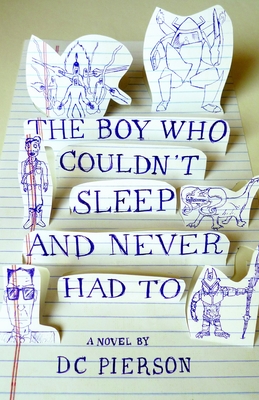
The Boy Who Couldn't Sleep and Never Had To by D.C. Pierson

If you never had to sleep just think of all the things you could do. If you didn’t get tired but could stay up all night to do whatever you wanted, what would you do? Oh the possibilities. Think of all those things you’ve wanted to do but didn’t because you were just too exhausted. Well, 15 year old Eric Lederer has lived one consecutive day, never sleeping, always conscious, for as long as he can remember. But someone dangerously mysterious comes looking for him.

Pierson’s novel is hilarious. I laughed. My husband laughed at the quotes I read him. Written from Darren’s perspective (Eric’s best friend) the novel captures the daily lives of two nerdy, sci-fi loving teenagers. I enjoyed Darren’s reactions to Eric’s secret ranging from disbelief to awe. This novel felt really present to me. Pierson is able to capture suburban culture very well perhaps, I think, because he is such a young writer. It’s like he speaks my language (culturally speaking). The Boy Who Couldn’t Sleep explores all the aspects of an average young adults’ life as well as some unusual ones. I could relate to the Red Bull chugging, video-game playing, suburban existence of these kids. Ultimately, I think Pierson’s novel is a coming of age story about friendship.

This is a very 21st-century novel. The text is graphic at least twice about sex. The language is very colorful. And drugs are involved in their attempts to test Eric’s sleepless limits. I’ll have to say that I am usually pretty turned off by these elements. And the text would have been great without the raciness because there is a good story to tell. But Pierson is a great writer and doesn’t use language and sex in a merely gratuitous way. It feels like a natural part of these boys’ lives, like what many teenagers do and witness, as they stumble along the growing up cycle. Although considered a cross-marked title (an adult book that appeals to teens), I found it in the adult section. So, I don’t recommend it for very young teens as the content may make them feel uncomfortable.

My favorite part of this book (besides the humor) is the creative story-line. This kid really never sleeps and it leads to a whole lot of wild and bizarre adventures across the Arizona desert. My least favorite part was the ending. It wasn’t bad just not what I wanted/expected. It reminds me of the end of an X-files episode where Agent Scully effectively debunks the abnormal happening but Agent Moulder finds the wiggle room to still believe. That’s an inadequate analogy but the best I can do without spoiling anything!

Publisher: Vintage Books, 2010     Pages: 227
Rating: 3.5 Stars     Source: IC Public Library  

Monday, April 5, 2010

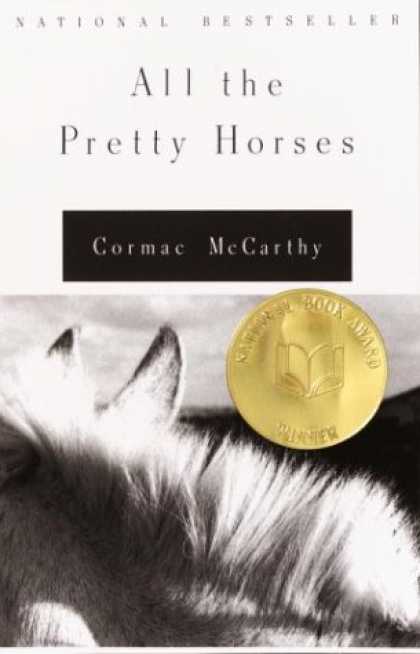
All the Pretty Horses by Cormac McCarthy

All the Pretty Horses is a beautifully written story set at the beginning of the end of two ages – the decline of the cowboy and the end of youth. It is 1949 and John Grady Cole is sixteen, ready to become a man and to put his love of horses to work. To do so, he and his seventeen-year-old friend, Lacey Rawlins, saddle-up and leave their Texas homes behind them in search of ranch work in Mexico. Of course, things aren’t always as simple as we think they should be. It isn’t for these boys either.

Reading the description, I thought this novel was as a bildungsroman, or coming-of-age story, in which the protagonist goes through a tough time to learn valuable lessons which enable him to become an adult. Such stories often include a romantic relationship which helps to achieve this end. But while reading, I felt John Grady was already an adult. This kid knows his mind and how to handle himself. He is already equipped with a trade (braking horses) and is darn good at it. I’m thinking of Dickens’ Great Expectations, often considered a bildungsroman. Pip goes through much to grow up and I don’t think the pattern is the same for John Grady. John is perhaps reckless but not immature. He falls in love but is not a hopeless romantic like Pip. Having finished reading, I will concede this as a coming-of-age story because John undergoes a shift in the way he understands the world. He acquires a more “grown up” perspective. He always tries to do what he thinks is right but still struggles with his conscience. Finally, John recognizes that not everything in life can be explained and rationalized, that all events in life can’t be nicely wrapped up as we would like. More than the physical events that John experiences, it is this mental growth that signals adulthood. For me, watching how John processed his actions was as motivating to turn pages as reading for the plot.

I am a huge fan of McCarthy’s unconventional writing style. I’m amazed at his command of language and find his writing beautiful and inspiring. This is a text to take your time with, to enjoy the language and visualize what is being described. The descriptions are out of this world if you will allow yourself to sink into the text and not worry about finishing and finding out what happens. This is an “enjoy the journey” book and is not about getting to the end but appreciating the steps that lead to it. I realized on page one that I would have to slow down. I’m glad I did. Here’s an example of a description:

Shrouded in the black thunderheads the distant lightning glowed mutely like welding seen through foundry smoke. As if repairs were under way at some flawed place in the iron dark of the world. (McCarthy 67)

Wow, I just love that. I had to read it four times, once out loud to my husband, and we gushed about it (much like I’m doing now). It just so happens to be storming outside right now, too, and that’s just how the lightning is. On another note, I enjoyed the Spanish mingled throughout the text and was surprised at how much I remembered from class. But if you don’t know Spanish don’t worry as the text is 98% English.


Every time I opened this novel, I felt completely transported to the West. It was like I was hanging in the clouds watching John Grady ride his horse. I think that’s why I enjoyed this book so much. This is book one of the “Border Trilogy” but All the Pretty Horses stands well on its own. If I didn’t know there were more books I would have thought it was a standalone novel. Book two will be in my reading list for the future.
Publisher: Vintage, 1993     Source: IC Public Library
Rating: 4 Stars                       Pages: 301

Friday, March 5, 2010

Persepolis II: The Story of a Return by Marjane Satrapi

In Persepolis II, Marjane’s parents send her to Vienna where she lives by herself and grows up quickly. It is an extremely difficult time for Marjane. After four years, she returns to Iran at age 18 with emotional baggage and conflicted feelings. In this poignant sequel, Marjane is a woman of two worlds, feeling western and Iranian but not fully accepted by either culture.

Persepolis II highlights the subjugation and chauvinism exuded by the state that makes it hard for free thinkers to live in Iran. Although the war with Iraq is over, fear is ever prevalent as Marjane and her friends dodge the “guardians of the Islamic revolution.” Marjane struggles to find companions with similar ideologies and often feels alone. This text shows how precious our freedom of speech is as we watch Marjane become paranoid about how she speaks, dresses and draws advertisements for work.

Book two is much more serious as Marjane deals with the burdens of adulthood. She turns to radical friends, smoking, drinking and relationships in an attempt to find a place and purpose for herself. It is her strong will that keeps her going, but even her will wavers when she experiences a severe depression leading to an attempted suicide. As she realizes the extent of the state’s control over her life, Marjane’s perception of and hope in her country changes. I found Marjane’s story to be captivating. She has lead a challenging life to say the least. Her memoir allows readers a peek into a very conservative and foreign culture and how many people there continue to hope for change and peace.
Publisher: Pantheon, 2004     Recommended Age: 15 and up
Source: IC Public Library       Pages: 187
Rating: 4 Stars

Thursday, March 4, 2010

Persepolis: The Story of a Childhood by Marjane Satrapi

Marjane Satrapi chronicles her life when growing up during the Islamic revolution. When the Shah is overthrown Marjane and her family are overjoyed but soon realize that their hopes for liberty are being thwarted by a new and powerful regime. While she and her family hold onto their freedom (with clandestine card parties and music bought from the black market) the war with Iraq breaks out, increasing tensions among Iranians as they fight over religion and food supplies. From the innocent and often naïve perspective of childhood, Satrapi presents a dissident voice during a troubling time.

Can one be patriotic and dissident at the same time? The Satrapi family loves their country so much they do not want to leave despite the increasing violence and subjugation. They love their culture, friends and family and feel their life in Iran is better than what it could be anywhere else, including the United States. They want to make their home a better place by staying rather than leaving. It is the people that define a nation and Marjane’s parents want to be a part of that definition. Despite the context she grows up in, Marjane is a typical teenager who wants to go to parties and listen to popular music. Marjane is resilient after all she sees and experiences during protests and war. Seeing Marjane as a typical kid should make it easier for U.S. kids to identify with her and put themselves in her shoes and to ask how they would have felt if they were Marjane’s maid, neighbor or if they were Marjane herself.

I read this book in one sitting and enjoyed it a lot. The text offered an inside perspective of a third-world country that I would likely have never seen otherwise. It shows us what it was/is like for women who are forced to wear the veil. Marjane’s spunky attitude kept me hooked. It was amazing that she never asked the reader for sympathy or pity but to simply listen to her story. She just wants her side of the story, the unheard part of the truth, to be told.
Publisher: Pantheon Books, 2004     Source: IC Public Library                  Pages: 160
Rating: 5 Stars                                  Recommended Age: 13 and up