Showing posts with label science fiction. Show all posts

Tuesday, December 24, 2013

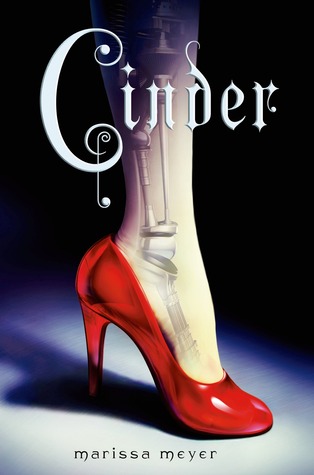
Review: Cinder by Marissa Meyer

Cinder was one of my favorite reads for 2013 and hit with my teen book club. The book was a surprising treat. Meyer stays close to the original Cinderella fairy tale in that several characters and the story arch are all similar. But she weaves in a science fiction aspect with skill. Cinder(ella) as a cyborg? Yes!

Cinder is a heroine with spunk, grit and serious determination. Unlike the Cinderella most of us know, Cinder’s goal in life isn’t to get hitched to the prince. Rather she spends her days learning her craft -- expert mechanic. And it is her skill which puts her in the Prince’s sights.

Humans have colonized the Earth and morphed into hybrids called Lunars. They threaten Earth while it is succumbing to a mysterious plague. Cinder finds herself caught up in dubious research for a cure in a political landscape that is quickly changing. An evil stepmother, an android fairy godmother, a coach of Cinder’s making and a race to the ball that is sure to bring laughter… Cinder is a clever YA novel with a lot to discuss, and many comparisons for those who have read various versions of the fairy tale.

The sequel, Scarlet, is already out and the third book, Cress, is out February 2014. Teen guys and girls alike enjoyed this novel in my book discussion. Definitely a thumbs up!

Publisher: Feiwel & Friends, 2012.     Pages: 390
Rating: 4 Stars     Source: Public Library

Tuesday, June 12, 2012

Review: A Confusion of Princes by Garth Nix

Taken from his parents as a toddler, Khemri was groomed to be a Prince of the Empire -- a biologically, technologically and psychologically upgraded human, one of thousands who rule the Empire, governed only by the Imperial Mind. Having come of age, Khemri is elated to take a post as Prince. But the Empire is a more dangerous place than he was lead to believe and power and glory more elusive and less thrilling than he expected.

The book begins with a great hook: “I have died three times, and three times been reborn...” (1). Nix quickly introduces the technologically advanced world via Khemri’s voice. He tells his story of transformation from an obnoxious and egotistical teen (an gross exaggeration of teenagers generally?) to a more thoughtful, mature adult. As with Nix’s Abhorsen series, I enjoyed how the protagonist deals with real coming-of-age issues, albeit in a sci-fi setting here. Khemri’s transformation is that of many teens’. While Khemri may fight his battles in a spaceship, his transformation from identity/thrill-seeking teen to a more mature adult is relatable.

I was excited to read A Confusion of Princes as I am a fan of Nix’s Abhorsen/Old Kingdom series. I’m re-listening to Lirael now. I enjoyed the hierarchy within the Empire with its unique system of mental communication. Yet, the novel could have used another hundred pages. The plot moved too swiftly and didn’t leave time to explore this interesting world and its characters. As a survival story, A Confusion of Princes did not disappoint. But more character development was needed.

On an aside, Khemri’s character is repeatedly defined as being brown-skinned with dark eyes. Yet, the character on the cover, though hard to see clearly, looks to be white. I like the cover on its own but would have liked it more if the guy on the cover clearly represented the character in the book.

Nix fans won’t want to miss A Confusion of Princes with its unique, technologically advanced world. Khemri’s story will please teens who enjoy Star Wars, space operas and survival stories. Overall, I think I’m more of a fantasy fan than science fiction fan but I still enjoyed this story. This book counts towards the POC Challenge. Favorite Quote: "'There is always a choice,' said Morojal. 'Even if the alternatives don't appear to be equal'" (134). Publisher: HarperCollins, 2012 Pages: 337 Rating: 3 Stars Source: Public Library

Tuesday, December 6, 2011

Review: The Death Cure by James Dashner

The Maze Runner trilogy comes to a dramatic conclusion in The Death Cure. Thomas and the Gladers escaped the Maze (book 1) only to be thrown into the zombie infested Scorch (book 2) as part of a desperate experiment to save mankind from the Flare -- the zombie disease. Now, as all the variables have been tested for, Thomas realizes his role in the testing runs deeper than he knew.

The setting of each book is distinct, creating unique environments which the characters must survive in. The Death Cure's is an urban setting in the dead of winter. The last surviving towns are walled off to ensure the Flare is quarantined but civilization is crumbling as more and more people succumb to the disease.

Thomas realizes that fleeing is not an option as the city of Denver goes mad with disease and desperation. Instead, he confronts WICKED, the organization responsible for the tests, in order to get the answers he needs  about his past so he can decide what to do with his future.

Confronting WICKED results in a lot of fighting and near death escapes much like the first two books. Yet, I felt like The Death Cure dragged on a bit. Unlike the first two, this book did not keep my attention. I wasn't hanging on at the end of each chapter. The answers to some of the long-standing questions throughout the series were a little flat. I expected something slightly more clever or more grey. And the grand conclusion was a tad too easy and felt unusual for Thomas' character.

Fans of the series won't want to miss The Death Cure because if you're like me you'll have to know the ending to the story. Many characters from the first two books resurface to play interesting roles. This series isn't for the faint of heart. There's gore, death and destruction. Don't get too attached to a character because you never know when someone will turn zombie or turn coat. Despite the slight let down in book three, I have really enjoyed this young adult series and recommend it to dystopia fans.

Publisher: Delacorte, 2011     Pages: 336
Rating: 3 Stars     Source: Public Library

Sunday, June 26, 2011

Review: The House of the Scorpion by Nancy Farmer

On the bottom of Matt’s foot a tattoo states: “Property of the Alacrán Estate.” He is a clone, an exact replica of a powerful drug lord, El Patrón, who rules Opium, a small country between the U.S. and what was once Mexico. While El Patrón dotes on Matt, the rest of the Alacrán family is openly hostile save for one girl, Maria. Everyone seems to know something Matt does not. Who can he trust when everyone seems to be hiding something?

The story is constantly changing direction. As Matt grows up, and his understanding of his situation becomes less fuzzy, his circumstances change – sometimes for better and sometimes for worse. Farmer takes her time developing Matt’s character. The chapters are grouped into sections which divide Matt’s life into ages: 0-6, 7-11 and so on. I found Matt’s story gripping, especially the last half. I was reading while riding the bus and I didn’t notice the bus come to stop. I didn’t see everyone get off. Nor did I hear the driver twice tell me the bus was out of service and I needed to get off. (Yeah, I felt a little silly.) That’s how engrossing the story was.

It was exciting and bit scary watching Matt figure out answers to his questions and unearth the dark secrets of El Patrón. Each new chapter of his life required Matt to adapt in order to survive in Farmer’s world. It is an intriguing world with a bizarre political structure, a dangerous drug lord, a psycho family and a resilient protagonist. If you know a middle school or high school reader who enjoys thoughtful science fiction then make sure to recommend The House of the Scorpion.

Publisher: Simon Pulse, 2004     Pages: 380
Rating: 4 Stars     Source: Public Library

Tuesday, April 19, 2011

Review: Leviathan by Scott Westerfeld

Leviathan by Scott Westerfeld is my first steampunk read. When I picked up the book with its shiny elaborate gears on the cover I knew I was in for a different type of story than my usual science fiction reads. Steampunk, at least traditional steampunk, falls under the science fiction category of alternate history.  And in the case of steampunk that means an alternate Victorian era history.

In short, Leviathan is about two teenage characters on opposites sides during World War One (1914-1918).* Deryn, wishing to serve in his majesty’s military, disguises herself as a boy and changes her name to Dylan. She becomes part of the crew on a the Leviathan, a huge genetically engineered hydrogen whale capable of flight - a new twist on the dirigible.** Alek is the fictional son of Archduke Ferdinand, heir to the Austro-Hungarian throne, whose assassination sparked WWI.*** Alek must flee for his life and evades capture by traveling in mechanical bi-pedal “tanks” known as walkers.

Darwinists (Allies)

-What they make: beasties (like the Leviathan)

 -How they make them: DNA manipulation and incubation period

-Maintenance requirements: organic food supply and healing time


Clankers (Axis)

-What they make: gadgets and machines (like walkers)

-How they make them: gears and pistons

-Maintenance requirements: oil supply and spare parts

    Westerfeld creates a fantastic world with its bizarre creatures and machines. I enjoyed reading to see how these creations helped and hindered Dylan and Alek. There is a fair amount of suspense and quite a bit of action and violence. Dylan and Alek are faced with uneasy decisions which ask them to handle grown up situations. There are a slew of interesting characters to help them along the way. My only complaint is with the totally abrupt ending. I enjoy series and do not mind waiting to read the next book to find out what happens but Leviathan’s ending left me going “Really, that’s the ‘end’?” If you’re a one-and-done sort of reader this book may not be for you. I, however, will be putting the sequel Behemoth on my TBR list.

    Publisher: Simon Pulse, 2009     Pages: 338
    Rating: 3.5 Stars     Source: Public Library

    *While technically the Victorian period ends with Queen Victoria’s death in 1901, many consider the Victorian age to last a decade or two longer calling it, no surprise, the “Long Victorian Era,” therefore including WWI.

    **Steampunk revels in dirigibles.

    *** In reality, Ferdinand did have a son, Max. He and his sisters were exiled after the assassination.

    Wednesday, December 22, 2010

    Review: The Athena Project by Brad Thor

    From the inside cover: “When a terrorist attack in Rome kills more than twenty Americans, Athena Team members Gretchen Casey, Julie Ericsson, Megan Rhodes, and Alex cooper are tasked with hunting down the Venetian arms dealer responsible for providing the explosives. But there is more to the story than anyone knows.
                                    
    The Athena Project is an interesting mix of science fiction, thriller, mystery and historical fiction. What I liked most about this book was the WWII back story of Nazi experiments which resurface in a horrifying way. The all-girl Delta Force team kicks butt all over Europe as they parachute, karate chop, BASE jump, kidnap and breach and clear bad guy hide outs… all while dressed to kill, in both senses of the phrase.  

    The characters could have used a lot more development. Most of the time, the girls were little more than stereotypes. I felt this book might have been called “Bond Girls Strike Back.” The Athena team reminded me of Bond girls but with more brains. Do you remember Bambi and Thumper from Diamonds are Forever? The girl body guards whoop 007 up pretty good before Bond regains the upper hand…anyways! The Athena girls are about as shallow as the Bond girls but they get the job done for King and Country…except they’re not British but American. The slim character development was the only major problem I had with the book. I found the story interesting and exciting and there was plenty of action. Do be aware that this is the first of a trilogy; however, I think The Athena Project has good closure and works well as a standalone novel.

    Some may recall that I’m not normally a mystery/thriller type of reader. In an earlier post I talked about how the covers don’t usually draw me in. I’ve only had fair success with the genre, generally feeling unaffected to mildly entertained when finished reading. So, I’m not the target audience. Nonetheless, I had fun reading this book. I can envision The Athena Project becoming a movie and won’t be surprised if it does become one someday.

    Publisher: Atria Books, 2010      Pages: 324
    Rating: 3 Stars                                Source: As a Shelf Awareness subscriber I received The Athena Project for free from the publisher. Thanks, Atria!

    Wednesday, December 15, 2010

    Review: Mockingjay by Suzanne Collins

    Collins did a fabulous job! What a great ending to The Hunger Games trilogy. The plot had many little unexpected moments that thrust Katniss into difficult situations. I felt the secondary characters really came to life in Mockingjay. They all had important roles to play. The love triangle endures until the choice becomes clear to Katniss who, finally able to let the “act” drop for the cameras, can make up her own mind. I think she made the right choice.

    I feel like I need to defend Katniss, our heroine. I know most people enjoyed Mockingjay but I’ve seen a few reviews of some who didn’t like it. They thought there was not enough gore or that Katniss became weak and allowed herself to be bullied. I didn’t find either circumstance to be true, especially the later.

    What I liked about Mockingjay:

    ***************************Mild Spoiler Alert*****************************

    -It gave a fairly realistic look at what happens to someone who goes through a traumatic experience. The truth is, that unless one is cold hearted, then killing someone, even in self-defense, is going to affect a person. Also, knowing someone you love is in constant danger is hard to cope with. I’ve been a military wife. I know what I’m talking about. But I can’t imagine having to watch someone I love be used and abused.

    -When you’re sick physically, emotionally and psychologically it is easier to be taken advantage of. Even if Katniss had been unscathed by her circumstances it still would be difficult to know who to trust and how to act. What was a 17 year old to do? Spit in the face of district 13 who gave her people shelter just because she had suspicions? I don’t think so. 

    ******************************End Spoiler*********************************
    Throughout the series, but especially in Mockingjay, I liked the focus on media. Almost as much as on the battle field, the war for the districts is waged on television. Katniss’ appearances on T.V. cause the balance of power to rock back and forth. The Fourth Estate, the watchdog, a.k.a. the media, is supposed to watch out for the interests of Everyman. But who’s watching the watchdog? I like the opportunities this series gives 
    kids to think of larger issues in our society. 

    Publisher: Scholastic, 2010           Pages: 390
    Rating: 5 Stars                                 Source: I won this book from The Nerd’s Wife! Thanks!

    Thursday, December 9, 2010

    Review: Eaters of the Dead by Michael Crichton

    I was totally surprised by this book and really enjoyed it. First of all, I like books that have layers of narration. So, as in Heart of Darkness, there’s an unnamed narrator quoting the main character (Marlow) the entire story. Or, like in Washington Irving’s stories (i.e. Rip Van Winkle) there’s this guy, Geoffrey Crayon, pretending to be the author who is supposedly writing the book from some documents he found. I love that sort of literary device.

    So, when Eaters of the Dead opened by announcing the recovery of a famous manuscript, and that this book was the most accurate retelling of the original account of Ibn Fadlan’s epic adventure of one of the first encounters of an Arab with Norsemen, well, I was eating it up. And the first chapter is actually from a real manuscript which Crichton uses as a way introduce the voice of the Ibn as narrator before taking over the writing process.  

    My husband read Eaters of the Dead when he was a kid and remembers it being one of his favorites. So, I decided to give it a try. What my husband didn’t realize, and what I began piecing together while I read, was that Eaters is a retelling of Beowulf. I read Beowulf a couple years ago for a class so some of the names of people and places, like Rothgar (Hrothgar )and Heorot, were familiar. Many names have been changed or altered so I had to wait for the story to unfold before I was like, yeah, this is a sweet retelling of Beowulf! Now, I remember Beowulf being terribly boring. Eaters of the Dead is not boring. It was spooky and sometimes funny.

    Some of you may know the movie that was based off of this book – The 13th Warrior with Antonio Banderas. The movie is ok. It’s fairly entertaining. But no surprise, the book is better. It was just a lot of fun to read.  I think I prefer Crichton’s historical fiction books better than his urban sci-fi books. I liked The Great Train Robbery, too. Technically, Eaters is sci-fi but it’s set a long time ago so I’m saying it counts as historical fiction.

    If you like tales of sea voyages, Vikings, cultural clashes or good old fashioned sword fights then this book may be for you.

    Publisher: Avon, 2006 (orignally 1976)     Pages: 304
    Rating: 4 Stars                Source: IC Public Library

    Friday, October 8, 2010

    Review: Ship Breaker by Paolo Bacigalupi

    Dystopian literature is a unique genre. It is often a subcategory of fantasy or science fiction which is right up my alley. I’ve always been drawn to “make believe” since I was a kid. It was a place where you could be more and do more. Add a backwards society on top of that other-worldly experience and you’ve got yourself one unique dystopia. In Bacigalupi’s Ship Breaker, The Island of Doctor Moreau meets Pirates of the Caribbean to explore a bleak future of an unprepared people.

    In Nailer’s world, the oil is gone and the “accelerated age” with it. With the addition of severe global warming, North America as we know it is forever altered. We find Nailer, a teenage boy on the light crew, stripping grounded oil tankers of wiring and staples by shimmying through ducts. When he finds a grounded clipper ship, a fast high-tech boat owned by the wealthiest “swanks,” Nailer thinks he’s struck the luckiest scavenge strike of all time. But its cargo proves to be even more valuable than the ship and extremely dangerous.

    Nailer is faced with many moral and ethical dilemmas. As is the case is real life, answers are not always clear cut. What if no one would ever know about your decisions? What if you could help someone but it meant betraying someone you cared for? Nailer’s belief in loyalty, trust and family is constantly challenged. Through swamps and shanties, over ocean in luxury boats that fly, Nailer scavenges for a new life out of the rubble around him.

    There was a lot of action going on but not enough focus on any one theme or relationship. I could appreciate the writing but the third person narration was a little flat for me. I was never caught up in the read or held on edge. I could see what was coming and the journey wasn’t interesting enough to make up for my foreknowledge. That being said, I do think young teenagers, especially boys, might be drawn to this book. It’s a rough and violent world Nailer lives in so be ready for a colorful cast and carnage. Although not particularly memorable for me, Ship Breaker was a fast and fun read.

    Publisher: Little, Brown and Company, 2010     Pages: 326     Source: IC Public Library
    Rating: 3 Stars     Recommended Age: 14 and up

    Thursday, September 16, 2010

    Guest Review: A Superior State of Affairs by Tom Maringer

    My mom has provided a review for us today! She bumped into the author who, in addition to being a writer, is a geologist and fantasy coin and button maker. My mom collects buttons and rivets so she was very interested in Tom's work. But Mr. Maringer's book isn't about buttons... Here's Mom's review:

    A Superior State of Affairs by Tom Maringer is a sci-fi mystery set in the year 2017 in a post-United States now know as the “North American Federation”.  Geologist “Digger” Puttonen has developed an invention that could change the world.  Arne Harjaala is an old drunk known for telling tales about the “old days” of mining.  But one evening when Digger hears Arne mention a 1906 mining disaster in which Arne is rescued by a “blue light”, Digger's interest is piqued.  That same night, Digger and Arne must fight for their lives, surviving a raging blizzard and the hostile pursuit of men out to silence Arne for good.  And, it seems like the whole world is set on procuring Digger and his invention in their quest for world-dominance.

    This story is full of science and science fiction, intrigue, geography, and a cast of characters that runs the gamut from spies to Indians, assassins to politicians, and telepaths to psychopaths.  A lot of action is packed into a few short wintry days, along with a lesson in all things mining, which I found interesting and out of the norm from my reading regimen.  Before delving into the story, it would be helpful for the reader to get acquainted with the Glossary of Terms found in the appendix.

    I enjoyed the basically good-guy image of Digger, and could relate to his “fight for the right”.  Each chapter is written from the point of view of just a few of the books' many characters, which is how so much action can take place over the space of a few days, in roughly 500 pages.

    Themes such as “Big brother is watching you”, humanity vs. technology, and personal freedoms vs. the “common good” all intertwine in this imaginative thriller.  Some strong language and sexual situations make me suggest the 17+ crowd would be an appropriate audience. 
    Publisher: AuthorHouse, 2004     
    Source: purchased directly from the author via this website (you can get a signed copy this way).
    Pages: 497     Additional Info on Tom Maringer 

    Thanks for the review Mom!

    Wednesday, August 25, 2010

    Review: The Passage by Justin Cronin

    Finally, I finished it! Freely admitting my laziness, here is a summary from Shelfari:
    First came a security breach at a secret U.S. government facility that unleashed the product of a chilling military experiment. Then, the unspeakable: a night of chaos and carnage gave way to sunrise on a nation, and ultimately a world, forever altered. All that remains for the stunned survivors is the long fight ahead and a future ruled by fear—of darkness, of death, of a fate far worse.

    As civilization swiftly crumbles into a primal landscape of predators and prey, two people flee in search of sanctuary. FBI agent Brad Wolgast is a good man haunted by what he’s done in the line of duty. Six-year-old orphan Amy Harper Bellafonte is a refugee from the doomed scientific project that has triggered apocalypse. He is determined to protect her from the horror set loose by her captors. But for Amy, escaping the bloody fallout is only the beginning of a much longer odyssey—spanning miles and decades—towards the time and place where she must finish what should never have begun.

    The first two hundred pages were painstakingly slow for me. If it wasn’t for the hype and the fact that I generally enjoy dystopias, I’d have put it down and forgotten about it. After page 400, I was more or less enjoying the read. Things keep slowly escalating but I can’t say I ever felt sucked-in until the last fifty pages.

    The best parts were when the narrative broke out of the standard third person point of view for snippets of emails, journals and logs. I enjoyed these parts a lot which broke up the string of events and offered glimpses into the pre-vamp past, vamp-infested present and the suggestion of a unique unknown future.

    The characters felt real to me except for the Sister Lacey – she was a mystery. I didn’t understand why she came to the U.S., why she felt connected to Amy, or what exactly her role was in the big picture. A statement on religion or religious beliefs? Maybe just about preserving innocence? I don’t know.

    My favorite character was Michael or “the Circuit.” He gave me some hearty chuckles. I also really liked Peter with his self-doubt and conflicted feelings. I realize Amy is a link between everyone but, I felt the novel was really Peter’s story. By the end I was enjoying the party that forms and travels together. I’m not normally one to read for characters but I did with The Passage. I wanted to see how each character would deal with new situations. I wanted Peter to find some answers – about his family, his future and himself.

    As for themes, I’m sure there plenty to be sucked out of the novel but none left as big an impression on me as the idea of camaraderie – hoping, supporting and believing in each other when there is not always a real good reason to do so.

    What I feared most did happen. The novel ends with a giant teaser. After 766 pages I wanted some more wrap-up. The end was an “oh, my gosh what does that mean? What happened!” type of moment that does make me want to read the next book. After spending so much time with these characters I feel too invested in them to just leave them hanging.

    Who should read The Passage: those who like a more thoughtful use of the vampire theme, those who enjoy “quest” stories or dystopias. But it’s definitely not for the faint of heart; The Passage is the first of a planned trilogy.
    Publisher: Ballantine Books, 2010     Pages: 766
    Rating: 3 Stars     Source: Purchased on Amazon

    Monday, July 26, 2010

    Review and Giveaway: Sapphique by Catherine Fisher

    Sapphique is the sequel to Incarceron (my review), an epic fantasy by Catherine Fisher. I read Incarceron a couple months ago and really enjoyed it and couldn’t wait to read more about Finn the cell-born, Claudia the proud aristocrat, Jared the wise, Keiro the “oath brother,” and Attia the “dog-slave” girl not to mention the plotting Warden and the conniving Queen of the Realm.

    Things don’t look good for those trapped in the heinous intestines of the world’s largest prison. Will the Queen win and obliterate Incarceron, damning its inhabitant? Or will Incarceron triumph and take total control. Where is the Warden? Where are the Keys? Does Escape exist? Who is this legendary hero, Sapphique? Does Finn even know who he is? Will Keiro’s bravado help or make things worse? If you’ve read Incarceron you’re probably dying to know the answers.

    The characters are well developed and I enjoyed getting to know them more. Without his oath-brother’s presence, Finn is given the chance to step-up and prove himself. It was interesting to watch his development from tortured soul to commanding heir.

    Claudia matures as she learns to see life through others’ eyes. She understands more fully that ending Protocol, the enforced low-tech aristocratic society, will mean her fall from luxury.

    A new figure makes an appearance in the prison, the Enchanter. His role threw me a little and here’s why: I enjoyed the rational, “scientific” explanations for how the prison works and for how the Realm is run. As with most science fiction, there are devices that do amazing things – time travel, space travel, etc. – and the reader just accepts that they work, ya know? And I could accept how gadgets work in Fisher’s books, too. But the Enchanter brings the element of magic. Is it real, are we supposed to believe it’s real?

    Mild Spoiler Alert: The asterisks below signal a spoiler-free zone.

    Especially at the end, the explanations and loose ends were tied up with magic. I felt this was a cop-out and wanted what I had come to expect, a more “scientific” explanation if you will, for all the answers.

    ****************************************************

    Ultimately, Sapphique was entertaining and a must read if you’ve read the first book. It did take awhile for me to become interested in the story again. But about half way through I began tearing up the pages to find out what the heck was going to happen! There are enough twists to keep things interesting. If you liked Graceling or enjoy fantasy with a sci-fi feel to it you might like these books, too.
    Publisher: Hodder Children’s Books, 2008 (UK version)     Pages: 470     Source: I won this book!
    Rating: 3.5 Stars     Recommended Age: 12 and up
     
    I'm giving Sapphique away to one lucky winner in the U.S. Click HERE to fill out an entry form!

    Wednesday, July 21, 2010

    Review: The Hundred Thousand Kingdoms by J.K. Jemisin

    Looking for a page turner? Look no further. The Hundred Thousand Kingdoms by N.K. Jemisin is a fantasy novel that pulled me in to its strange world and had me returning as often as I could spare a minute to pick up the book.

    Summary from Shelfari:
    Yeine Darr is an outcast from the barbarian north. But when her mother dies under mysterious circumstances, she is summoned to the majestic city of Sky. There, to her shock, Yeine is named an heiress to the king. But the throne of the Hundred Thousand Kingdoms is not easily won, and Yeine is thrust into a vicious power struggle with a pair of cousins she never knew she had. As she fights for her life, she draws ever closer to the secrets of her mother's death and her family's bloody history. With the fate of the world hanging in the balance, Yeine will learn how perilous it can be when love and hate - and gods and mortals - are bound inseparably together.

    The title of the book is somewhat misleading, in my opinion. I thought this story would be an epic, a story that traversed a vast kingdom. But the majority of the action takes place in the castle-city of Sky. So, I was disappointed in this respect.

    The beginning was set up well. The politics and intrigues of the royal family are quickly reveled as are the gods trapped in mortal bodies who are at odds with the royalty. I thought that this conflict between the royalty and the gods was the main point to the story. While it is important, the plot actually turned into a romance between Yeine and the dark lord, Nahadoth. I don’t mind political intrigues with a little romance but this story was a romance with a little political intrigue. The romance between Yeine and Nahadoth was interesting with his split personality, but the romance was overdone for my taste, particularly because I wanted more of the original plot and kept waiting for the epic to begin.

    The story is told in first person by Yeine and it is Yeine’s personality, strong and inquisitive, along with Jemisin’s writing ability, which kept me turning pages. I wanted to see Yeine solve the mystery about her family and was never sure how things were going to play out. I appreciated the humor which offered the right amount of comic relief.

    The relationships between the gods were more than a little weird. Jemisin draws from many myths about gods to bring hers into creation. While most of the gods’ back story was interesting there are some parts about their sexuality that the reader is supposed to accept as normal for the immortals that was just disgusting. This is not a focus of the novel but I don’t understand what purpose mentioning these relationships served. I think mentioning the sexual relationships between family members could have been left out. It certainly didn’t make me want to see Yeine hook up with one of them.

    While reading I kept making comparison to Stephanie Meyer’s sci-fi novel The Host. Both novels explore the idea of having two personalities within oneself or being inhabited by another entity or personality. They explore the ideas of one’s conscious and subconscious and what makes a person’s identity. They look at how we go about choosing what kind of person we want to be. I wasn’t a big fan of The Host and think Jemisin’s writing is way better but, if you liked The Host, you may appreciate The Hundred Thousand Kingdoms.

    If you’re looking for a fast read, a romance or a new look at mythology this novel might be for you. I enjoyed the pacing that kept things escalating right up to the end. Some of the answers I saw coming, some I didn’t. While this is the first book of a trilogy I felt The Hundred Thousand Kingdoms stands well on its own. Overall, I liked this book but could have done with less romance and more action and adventure.
    Publisher: Orbit, 2010     Pages: 228     Source: IC Public Library
    Rating: 3 Stars     Recommended Age: adult

    Thursday, July 8, 2010

    Review: Catching Fire by Suzanne Collins

    Catching Fire, book two in The Hunger Games trilogy, captured my attention right away and I was gripped by the story for the entire read. A couple times I had to put the book down for a second, look up at my husband and gasp “No way!” to which he looked at me confused and then I went back to reading. This is a seriously entertaining series. If you haven’t begun The Hunger Games yet, you really need to.

    Katniss and Peeta survived the brutal Hunger Games only to become unwitting symbols of resistance to the Capitol. The Districts have become increasingly disgruntled by the Capitol’s abuses. And Katniss’ refusal to be a pawn in the arena has sparked a fire that neither she nor Peeta can control. The Capitol hits hard in retaliation in an attempt to control “the girl on fire.” My reivew of the first book can be found here.

    The characters developed nicely in the sequel. I liked getting to know more about Haymitch, District Twelve’s only other survivor/victor of the Games and Katniss and Peeta’s mentor. We really get to see why he has turned to alcohol and also, why he has learned to care so much about Katniss and Peeta and vice versa. We get to see Katniss’ mother more as she springs to action (remember she was mostly depressed and defunct in the first book). I liked seeing the mother daughter relationship being healed. And we see more of Gale’s family so, even while Gale is often absent, we learn more about him through his family.

    There’s just as much action and adventure in book two. Things get violent as the Capitol closes in. You can feel the stress riddling the characters. It’s only a matter of time before the spark turns into a fire. As usual, I enjoyed Katniss’ strong personality. She deals with events as best she can. She’s a little head-strong but that’s definitely a quality needed for survival.

    The romance between Katniss and Peeta, a forced pretense on her part for survival and genuine on his part, becomes even more complicated. How should she feel about the boy responsible for saving her life? But then there’s her best friend Gale? Oh, dear. I’m not sure yet, but I think I’m voting for Peeta. I reserve the right to change my mind. Lol. The romance is still rather innocent but they do get close and kiss often for the cameras. My slight concern for young readers is Katniss’ melt-down when she gets drunk one night. It’s not something she’s proud of and doesn’t happen again. But adults may want to mention that Katniss’ behavior here is not normal and that alcohol didn’t help her at all to solve her problems. This is a very small incident in the book and I wouldn’t let it stop adults from letting kids read it.

    The writing is written with the same POV as the book one – in first person, present tense from Katniss’ perspective. As with the first book, it took be a few pages before I adjusted to the writing style but it was less of a problem for me in book two. Overall, I think Collins is a great young adult writer. I can’t wait for Mockingjay’s release in August!
    Publisher: Scholastic, 2009     Pages: 400     Source: U of Iowa Libraries
    Rating: 5 Stars     Recommended Age: 13 and up

    Thursday, June 24, 2010

    Goop Soup: Nathan Abercrombie, Accidental Zombie book 3 by David Lubar

    Nathan Abercrombie, fifth grader, is in training to be a super-spy. But will he complete his training in time to save the city from a dangerous and subversive terrorist group? As if saving the world isn’t difficult enough, Nathan must cope with being a zombie, the living-dead. For everyone’s safety, he must keep this and his spy activity a secret from his watchful parents.

    This is totally the kind of book I would have devoured as a kid. I adored The Magic School Bus books and in many ways, Goop Soup reminds me of the former series expect Goop is for an audience willing to read text with no pictures. Science abounds in Goop Soup as Nathan and his friends Mookie and girl-genius Abigail come up with solutions to world-crushing problems. Don’t have a temperature because you’re dead? No problem. Chemistry is here to the rescue. With a little help from BUM, the spy agency that has recruited Nathan, and his trusty friends, there is no problem that a little scientific research can’t solve.

    I’m encouraged to see a new (to me) series that will excite kids about the sciences. I think it’s important for youngsters to know that science is something they can do and can be fun, not just a bunch of hard work.  And I think Lubar’s new book does that.

    In the back of the book there is a Reader’s Guide with some excellent questions. Some require kids to do a little research while others involve written responses like poems and letters. Geesh, they were even fun for me to think about. I think Goop Soup will appeal to both boys and girls who like science or who are looking for an adventurous story. I definitely recommend this book to parents of young readers.

    Publisher: Starscape, 2010      Pages: 176       Recommended Age: 9-12
    Rating: 5 Stars                           Source: received for free from the author. Thanks, Mr. Lubar!
    P.S. I really did like this book and receiving the text in no way influenced my rating. 
    Check out David Lubar's website for info on his books, humor and more!

    Monday, May 24, 2010

    Incarceron by Catherine Fisher

    It’s hard for me to believe this book took three years before it emerged in the U.S. market. But I’m glad it’s here now. I hope it gets popular because I enjoyed this story and want to hear more about what other readers thought.

    Claudia has prepared all her life to marry the prince. But as the wedding day approaches, the aloofness of her father, the Warden, and certain rumors spur Claudia to action. Questions must be answered. Finn, a cell-born without father or mother, scared and alone, is released into the world of Incarceron – a vast prison system, dark and dangerous, a great experiment gone wrong.

    I totally read for plot. It usually can’t be helped but this time I became engrossed by the all the elements of plot. The exposition, setting and intro material about characters, etc, pulled me in. This is hard to accomplish. I usually can’t wait to get to the middle of a story and become worried that I’m wasting my time. There’s a lot of action and intrigue in the first few pages so I had no problem getting into it. The raising climax was nail biting. Where is the prison? How is it controlled? How is it that no one gets in or out? The climax is fairly predictable. We’re set up to know what to expect. And then, for the most part, it happens. But the resolution was great. I wasn’t sure about the prison’s location but at least one of my theories was in the ball-park. And I didn’t see the last bit coming (I don’t want to give anything away but it was a gasp moment). I am so excited I won a copy of the sequel, Sapphique (available this Dec. in the U.S.), because I am really intrigued by the futuristic society and the prison. I want to see how Claudia and Finn attempt to achieve their goals.

    Let’s talk prose. Fisher uses third person narration in Incarceron and it works very well as she alternates between the two worlds. I enjoyed the “quotes” at the beginning of each chapter that were bits of Incarceron legend or the gossipy private letters between characters that are full of intrigue. This story is set in a technologically repressed future (creating a "high fantasy" feel) and a couple times I found the dialog sounds a bit too “today.” But it’s not a big deal and is probably just me being picky. However, there were some times I got lost. The descriptions can be hard to interpret. With a re-read I usually got what was going on. This is the only real drawback to this book. Nonetheless, I didn’t find they stopped me from wanting to continue. Incarceron is a fast read that reminded me of The Hunger Games. Both are fantasy set in the future, they feature a good dose of violence and action but, oddly, remain very innocent. I think the story is ok for younger readers but they may have difficulty with some of the tricky descriptions. But that doesn’t mean younger  kids (or adults) wouldn’t enjoy Incarceron. I sure did!

    Publisher: Dial, 2010 (originally in G.B. in 2007)     Pages: 442
    Rating: 4.5 Stars     Recommended Age: 12 and up    Source: IC Public Library

    Saturday, May 15, 2010

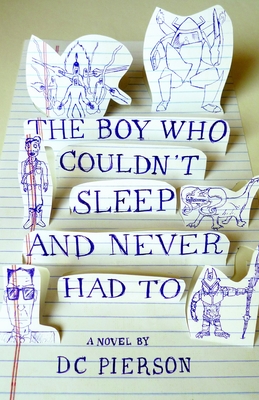
    The Boy Who Couldn't Sleep and Never Had To by D.C. Pierson

    If you never had to sleep just think of all the things you could do. If you didn’t get tired but could stay up all night to do whatever you wanted, what would you do? Oh the possibilities. Think of all those things you’ve wanted to do but didn’t because you were just too exhausted. Well, 15 year old Eric Lederer has lived one consecutive day, never sleeping, always conscious, for as long as he can remember. But someone dangerously mysterious comes looking for him.

    Pierson’s novel is hilarious. I laughed. My husband laughed at the quotes I read him. Written from Darren’s perspective (Eric’s best friend) the novel captures the daily lives of two nerdy, sci-fi loving teenagers. I enjoyed Darren’s reactions to Eric’s secret ranging from disbelief to awe. This novel felt really present to me. Pierson is able to capture suburban culture very well perhaps, I think, because he is such a young writer. It’s like he speaks my language (culturally speaking). The Boy Who Couldn’t Sleep explores all the aspects of an average young adults’ life as well as some unusual ones. I could relate to the Red Bull chugging, video-game playing, suburban existence of these kids. Ultimately, I think Pierson’s novel is a coming of age story about friendship.

    This is a very 21st-century novel. The text is graphic at least twice about sex. The language is very colorful. And drugs are involved in their attempts to test Eric’s sleepless limits. I’ll have to say that I am usually pretty turned off by these elements. And the text would have been great without the raciness because there is a good story to tell. But Pierson is a great writer and doesn’t use language and sex in a merely gratuitous way. It feels like a natural part of these boys’ lives, like what many teenagers do and witness, as they stumble along the growing up cycle. Although considered a cross-marked title (an adult book that appeals to teens), I found it in the adult section. So, I don’t recommend it for very young teens as the content may make them feel uncomfortable.

    My favorite part of this book (besides the humor) is the creative story-line. This kid really never sleeps and it leads to a whole lot of wild and bizarre adventures across the Arizona desert. My least favorite part was the ending. It wasn’t bad just not what I wanted/expected. It reminds me of the end of an X-files episode where Agent Scully effectively debunks the abnormal happening but Agent Moulder finds the wiggle room to still believe. That’s an inadequate analogy but the best I can do without spoiling anything!

    Publisher: Vintage Books, 2010     Pages: 227
    Rating: 3.5 Stars     Source: IC Public Library  

    Thursday, April 29, 2010

    Old Man's War by John Scalzi


    I did two things on my seventy-fifth birthday. I visited my wife's grave. Then I joined the army. - Scalzi 9
    These are the opening words to Old Man’s War by John Scalzi, a science-fiction novel wherein humans compete with extra terrestrials for inhabitable planets. If you like action and adventure you’ll get it here since colonizing the universe incurs a lot of conflict. The colonizing officials find it expedient to recruit earth’s elderly, with life experience to draw from and nothing left to lose, and transform them into battle-ready soldiers. These recruits have no idea what they’re in for, literally, as earth is under an information quarantine. John Perry is one such recruit and this novel tells his native-earthling-turned-super-space-soldier story.

    Scalzi has an abundant sense of sarcasm which is injected into John’s Perry’s first-person narration that I found amusing. The humor kept an otherwise serious colonial commentary feeling lighthearted and fun to read. The characters were great, especially some of the minor ones. There’s sort of a love story here but it’s secondary to the main plot. Speaking of which, it took awhile before the main conflict is revealed but it wasn’t a drawback for me. I was so engrossed in Perry’s transformation and his training that I didn’t get bored wondering what it was all pushing towards. I saw the end “twist” coming but it was still a great ending and was not disappointing for having figured how things would end. Scalzi’s descriptions of planets, aliens and technology were sufficient and enjoyable for me. If things get real technical I tend to get lost and bored. This was not the case with Old Man’s War. Overall, this was a fast and fun read. If you’ve never visited Scalzi’s blog check it out here: http://whatever.scalzi.com/. If you’re not into science-fiction you’ll find he posts on a lot of topics, book-ish and more.
    Publisher: Tor, 2005     Pages: 320     Source: IC Public Library
    Rating: 3.5 Stars           Recommended Age: 17 and up for language and sexuality

    Saturday, April 24, 2010

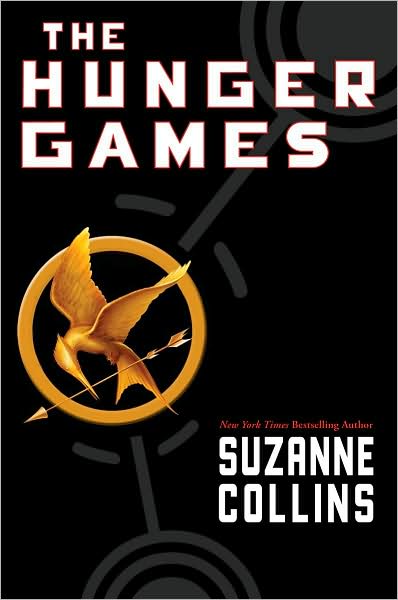
    The Hunger Games by Suzanne Collins

    The Hunger Games was a nice treat. I’ve been drifting awhile in the sci-fi/fantasy genre and, finally, I’ve found what I’m looking for. This is a dystopian plot set in a post-U.S.A. North America that is broken into twelve districts. It’s a clever set-up and serves as a nice backdrop for the lives of those forced to play the hunger games – a Coliseum-like event set in the 21st century. Sixteen-year-old Katniss Everdeen is in the unfortunate position of a “tribute” or a player of the Hunger Games. She must search and destroy the other players before they seek and destroy her.

    This book has some great action and adventure while teenagers fight for survival in the expansive arena. Weapons are used. People die in not so good ways. But all in the name of entertainment. Or, is it that simple? No, no! Just as the emperors of Rome used the Coliseum, the games are meant to inspire a fearful loyalty as much as they are meant to entertain. As the protagonist so clearly sees, the Capitol city uses the games to say “Look at how we can make you destroy yourselves so, don’t question our rule.” But not everybody feels negatively about the games. Many are avid fans who support certain tributes and bet on them. Katniss is deeply conflicted between her instinct for self-defense and her aversion to killing another person. Although there is violence I find the text illustrates how not simple being a part of violence is. Every victory in the games comes with physical and emotional baggage which is not easily gotten over. There’s a lot to draw out of this book and the violence is just one aspect of The Hunger Games. The Capitol stands as a symbol for decadent living – the ultimate fashion, food and power center. But their luxuries come at a price. Perhaps more than the strict laws imposed upon the district people, the ultimate flaw is that the citizens of the Capitol have become blind to their greed and inhumanity. I could go on but I’ll get to the gist of it…

    At first, the prose was not drawing me in. On page one the first-person present-tense narration turned me off and I thought “Oh, no. Not present tense and first person.” Not my favorite POV. However, the prose gradually improved until I really enjoyed Katniss’ narration. I felt inside her head, hearing a twig snap when she did, feeling panic when she did. I even teared up a couple times. By the middle of the book I was hooked and had to know how the games would end. It seems all great sagas tend to draw out the begining a bit. I’m looking forward to reading the sequel, Catching Fire. Besides the semi-slow draw, this was a great book. If you haven’t read it yet, hop on the wagon.
    Publisher: Scholastic, 2008     Recommended Age: 12 and up
    Rating: 4.5 Stars                        Pages: 374   Source: IC Public Library
    P.S. The Coliseum picture is one I took when I was in Rome last summer. It was strange to stand in a place where people died. Can you imagine watching such a "game"?

    Wednesday, April 14, 2010

    When You Reach Me by Rebecca Stead

    I loved this book! It was one of those stories I felt invested in the characters and enjoyed the whole reading experience. Before I get too carried away, here’s a short description.

    Twelve-year-old Miranda encounters shifting friendships, a sudden punch, a strange homeless man and mysterious notes that hint at knowledge of the future. These and other seemingly random events converge in a brilliantly constructed plot. – from: http://www.ala.org/ala/mgrps/divs/alsc/awardsgrants/bookmedia/%20newberymedal/newberymedal.cfm

    So, what was so great about his book? The voice, Miranda’s voice, was incredibly authentic. She was cute, spunky and genuinely concerned about those around her. Yet she was sometimes selfish and gave her mom a bit of lip. She isn’t perfect but she sure is loveable. Stead captures the concerns of a 12-year-old perfectly. Miranda often asks: Why does my best friend avoid me? Why do the girls at school give me dirty looks? She becomes aware of her family’s lack of money. Her first crush develops. And in addition to these normal bumps to growing up, Miranda receives mysterious and rather alarming notes. These notes drive the plot as Miranda tries to puzzle them together. I enjoyed how the book is written as Miranda’s reply to the messenger and how the text begins addressing someone we don’t know. This is a touching story of growing up, learning how to be a good friend and opening oneself up to possibilities. I don’t want to give too much away as there is quite a bit of mystery. The plot kept me guessing and I wasn’t sure of the messenger’s identity until he/she is revealed.

    This text references A Wrinkle in Time by Madeleine L’Engle (my review) throughout the book so, if you haven’t read Wrinkle you may want to do so first or at least read a synopsis of it before reading Stead’s book. Miranda finds comfort and role models in her favorite book and is alarmed when others try to pick it apart. She says, “The truth is that I hate to think about other people reading my book. It’s like watching someone go through the box of private stuff that I keep under my bed” (Stead 49). That’s often how I feel when a book is discussed in class and characters that I adore are scrutinized. It’s funny how adults will become defensive and argue their favorite character’s integrity! I can see this being a teacher’s great challenge when discussing books with kids and trying to get them to see a different perspective. Have you ever felt so strongly about a fictional character? When You Reach Me was a perfect story and a must read. I’m sure it will be a well-loved book for years to come.
    Publisher: Wendy Lamb Books of Random House, 2009
    Rating: 5 Stars            Source: IC Public Library           Pages: 200    Recommended Age: 10 +