Showing posts with label fantasy. Show all posts

Thursday, October 24, 2013

Review: The Immortal Rules by Julie Kagawa

Allison lives in the outermost circle of a walled-in city. Inside, humans are herded like cattle for vampires. Outside the walls live another blood-thirsty terror -- rabids. “Registered” humans give blood annually to vampires in exchange for food and clothing. Unregistered, like Allison, do not give their blood willing and are forced to scavenge. An unfortunate run-in on a scavenging raid forces Allison to become what she hates most.

The premise of The Immortal Rules caught my attention quickly and I enjoyed the overall storyline. Kagawa complicates the the zombie theme by introducing vampires into their origins. I enjoyed how the story unfolded, learning as Allison discovers how the vampire hierarchy has created a ruling elite across the country.

Allison is a survivor. She does what she must to live another day. She takes risks which lead to steep consequences. She also struggles to keep her new bloodlust in check so that she might protect herself and others. There is a seemingly doomed romance and plenty of action to keep teen readers turning pages.

Those who can’t get enough vampires stories will want to put The Immortal Rules on the their list. It is the first in a trilogy so get ready for an open ending. 

I'm really mixed on this book; I liked it but didn't love it. The action scenes were good, the vampire history and relationships interesting, the rabids fierce, the human nomads strangely rustic. But for me, the first person narration and obligatory-but-nothing-special romance detracted from an intriguing  premise. I’ve added the second book, The Eternity Cure, to my reading list but it may wait for some time.

Publisher: Harlequin Teens, 2012     Pages: 485
Rating: 3 Stars     Source: Public Library

Sunday, October 13, 2013

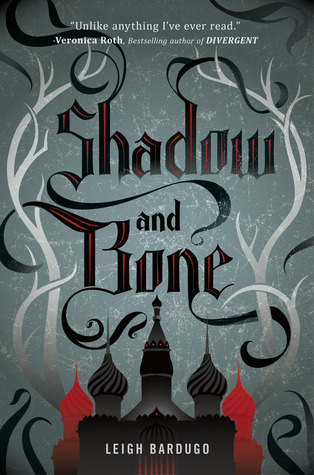
Review: Shadow and Bone by Leigh Bardugo

Shadow and Bone was a big hit with my teen book discussion group. There was a lot of animated talk and excitement about this new series. Leigh Bardugo weaves Russian culture with high fantasy adding just enough suspense and romance to keep readers intrigued and happily turning pages. Both the heroine and her antagonist are multidimensional characters, too, with strange pasts and questionable futures.

Alina is a teen orphan who discovers much later than usual that she is not just a commoner but a Grisha, one of the few born with a magical gift. And not just any Grisha, Alina has a special talent that could change the fate of her country. Bardugo uses first person narration and I think the third person would have been stronger. I felt Alina’s viewpoint limited the potential for world building. Shadow and Bone focuses on Alina’s transformation and coming of age while she comes into her new power. She struggles to decipher who her true friends are. Teenagers will relate to her anxiety and feelings of awkwardness as she discovers her new place in an adult world.

Fans of fantasy with a bit of romance will enjoy this well conceived and written debut novel. Alina is an imperfect character which is why I like her. While teens will be drawn to the love-triangle it does not completely dominate the story. Bardugo offers an interesting backdrop for the action which picks up considerably as characters race to control a destructive power. Readers will be left wanting to grab the second book, Siege and Storm. I  know my teen readers couldn’t wait!

While dystopias are all the rage right now, and I am a fan of them, Shadow and Bone is a nice retreat back to classic fantasy. If you're looking to diversify your teen's reading I would highly recommend this book! The Russian flavor to the story is a nice treat and sparked an interest in Russian culture during my teen book discussion.


Publisher: Henry Holt, 2012     Pages: 359
Rating: 3.5 Stars     Source: Public Library

Friday, September 21, 2012

Review: Nation by Terry Pratchett

The beginning of Nation gripped me. I loved the alternate-reality Victorian setting that’s introduced. The narrative quickly shifts to an alternate-reality Pacific island. Mau is on a quest to prove his manhood when the tsunami strikes and obliterates his village and the prim and proper Daphne is stranded on his island. I enjoyed Daphne’s sea voyage and the entire crash scene.

Together, Mau and Daphne rebuild the Nation as they overcome their fears of one another, take in refugees and learn to work with each other. The novel became increasingly introspective as Mau reconsiders all the old ways and worship of the old gods. As the new leader, he must decide how to direct his people and as truths are uncovered he learns that letting go of the past is not the same as disrespecting it.

My interest waned significantly in the middle. I just wasn’t interested in the story anymore and the underlying ideological message of questioning “the way things have always been done” and “the things we’ve always believed” was so transparent that I just got bored. However, the serious minded teen may enjoy this thought-provoking YA novel. This book counts towards the POC Reading Challenge!

Publisher: HarperCollins, 2009    Pages: 384
Rating: 3 Stars     Source: Public Library

Friday, June 15, 2012

Review: Deadlocked by Charlaine Harris

I discovered the Sookie Stackhouse series (Southern Vampire Mysteries) last fall and whizzed through 11 of the novels. They were pure fun to read and not my usual fare. I recall I was in "the curve" of the semester, where the newness had worn off, and I needed a mental snack break. The Sookie Stackhouse series was just the pick-me-up I needed.

Heretofore, the mystery in each story has held my attention. But in Deadlocked the mystery lagged a bit. The who-done-it was obvious and the suspense of watching the culprit outed wasn't as suspenseful as I'd liked. Sookie's relationship status didn't help much either. She's waiting for him to commit. He's waiting for her to commit. Lots of distrust. The novel is aptly named -- Deadlocked. Everyone is waiting for someone else to make the first move.

Several story lines fizzle out in this novel which makes for a downer read. Many of my favorite characters do put in appearances so that was nice. And Harris' writing style is fluid and makes for an easy, fun reading experience. There were answers in this novel but few conclusions...I guess that's why it's a series!

If you like Southern Vampire stories I recommend the series. Neither romance nor mystery are my usual reading choices but I have enjoyed Harris' characters and sense of humor and have picked up a few books  from her other mystery series (non-vampire related) to read.

Publisher: Ace, 2012     Pages: 336
Rating: 3 Stars     Source: public library


Thursday, January 26, 2012

Review: The Mostly True Story of Jack by Kelly Barnhill


“When Jack is sent to Hazelwood, Iowa, to live with his strange aunt and uncle, he expects a summer of boredom. Little does he know that the people of Hazelwood have been waiting for him for a long time...” - from inside the jacket.

Jack is invisible. At least he feels that way. His parents sometimes act like they can’t remember he even exists and then they dump his at his aunt’s. What’s a twelve-year-old to do?

Jack does not believe in fairy tales. But strange happenings force him to reconsider who he is and what he’s capable of.

I loved Barnhill’s writing for two reasons. First, as a native Iowan I know she’s spent time here, listening to the corn grow and cicadas chirping at night, because it’s reflected in her writing. Iowa isn’t flashy -- there aren’t any mountains or big cities -- but it has a quiet beauty which Jack discovers as he investigates the mysteries written in The Secret History of Hazelwood, written by his uncle. Secondly, Barnhill captures the essence of otherness in her writing which makes for good fantasy. I love writing that creates a mysterious atmosphere by leaving room for the imagination.  It makes you go, whoa, what in the world?

There is resolution in the ending but not a “happy ending” in a traditional sense. I found it very satisfying and think children readers will, too. Jack must make a difficult choice and any decision will have its consequences for him and those he cares about. This book shows how the world is not black and white, that good and evil are more complicated concepts than we wish they were. It’s unusual to find a children’s book that is willing to show this. I felt Barnhill’s representation of the ideas of good and evil, sacrifice, bullying and true friendship were masterful. The characters were great though there may have been one too many. That’s my only “complaint.” I loved the bodyguard cats, Gog and Magog. Hysterical! I can’t wait to see what Barnhill writes next!

Publisher: Little Brown, 2011 Pages: 323
Rating: 4.5 Stars Source: Public Library

Thursday, September 22, 2011

Review: Lirael by Garth Nix, Read by Tim Curry

“When a dangerous necromancer threatens to unleash a long-buried evil, Lirael and Prince Sameth are drawn into a battle to save the Old Kingdom and reveal their true destinies.Lirael, the second book in The Abhorsen Chronicles/The Old Kingdom series, begins deep within the mountains of the Calyr (those with the “sight,” who see the future). Lirael is parentless and sightless, an oddity in the Clayr household. She is young, too, only 14 and wants nothing more than to gain the sight.  To take her mind of her shortcomings Lirael takes a position as an 3rd Assistant Librarian in the Clayr’s massive library.

The commentary on librarians and librarianship is hilarious if somewhat disconcerting to a future librarian. Lirael chooses the profession because she knows she can hide there and avoid people – a perfect job for an odd, quiet girl! Hmm. On the flip side, Lirael looks forward to the adventures she will have in the library when alone there: long forgotten corridors, chained books with protective spells, interesting ancient trinkets and dangerous creatures! Of course, Lirael opens one too many doors and the story really begins.

Lirael’s companion, the Disreputable Dog, is now one of my all time favorite characters. Smart and sassy this K-9 offers comic relief while proffering mysterious insights for Lirael to digest. “Does the walker choose the path or the path choose the walker?”  A dynamic character, the Disreputable Dog is begging for a walk one minute and guiding a dangerous mission the next. “Dog, I want a straight answer. Who or what are you?” asks Lirael. And dog the replies, “I’m the Disreputable Dog! And your friend.” *Watering eyes*

Garth Nix is a great writer. The content is great. He builds a unique but believable world and sets interesting characters in it. He is a great storyteller but also a good writer in a technical and artistic sense, too. He never complicates passages. I’m never stumbling over sentence structure. The diction is good which shows in the dialog and descriptive passages which made my skin tingle as much as they made me laugh. I feel transported in these stories.

I listened to the audiobook (samples) which is read by Tim Curry who did an outstanding job. I was leery at the idea of listening for 15 hours but, wow, it was worth it. I was sad when the end came. I looked forward to listening to Curry’s dynamic voice every day. So much so, in fact, that I drove to the neighboring town and got a library card there so I could check out the third book, Abhorsen, with Curry reading again. (Oddly, my library only owns Lirael in audio format.) Curry booms, leers, whispers, lingers, rushes and pauses in all the right moments making the listening experience theatrical. It’s not over done but done just right. 

Two tiny issues:

1) Notwithstanding Tim Curry’s awesome voice acting, the first two disks of the story had me worried that Lirael was going to be a dud. Lirael spends a great deal of time moping in the beginning. It’s not that she hasn’t cause to mope but I did want to reach into the story and slap her face, tell her to stop obsessing about herself, to stop waiting for things to happen to her and make something happen! Of course, this is exactly what occurs as Lirael grows up (minus the slapping). And when Lirael began her struggle to find her place in the world I began to like her very much.

2) Lirael is not a standalone novel. It’s not that the reader misses too much info from Sabriel to understand what’s going on in Lirael but the ending is very unresolved. Personally, this did not bother me at all since I am enjoying the story. As I am writing this I have already begun the third book (good so far!) and feel as though Lirael and Abhorsen are the same book, really, just cut in half.

If you are a fantasy fan I highly recommend this series. I fully expect I’ll be purchasing these books in some format. Definitely re-reads. Read my reivew of the first book, Sabriel, here.

Publisher: Listening Library, 2002     Duration: 14 hours, 44 mins on 13 CDs
Rating: 5 Stars     Source: Public Library

Monday, September 19, 2011

Review: Silver Phoenix by Cindy Pon

This book will make you hungry. I'm not kidding. I had to fight the urge to order chinese takeout more than once. Pon uses culinary dishes to great effect, creating a distinctly east Asian fantasy novel. I swear I could smell the food while reading.

From the back cover: "Ai Ling can see into other people's minds and reach into their spirits. But she doesn't know why this power has awakened inside her. She only knows that it is growing. It leads her on an epic journey -- one that brings her to to edge of the deepest evil."

Mythology plays a significant part in this story as Ai Ling and her traveling companions, two brothers, encounter strange beasts, spirits, immortals and other worlds that seem to co-exist with our own. Some of these mythical scenes went by too fast for me. The text felt too rushed to continue the storyline and so some sections felt like they were not fully realized. Many traditional fantasy novels are heavy on world exploration, developing the setting. Many, what I consider "light" fantasy novels are heavy on character development/relationship building and the setting gets much less attention (Graceling comes to mind). I found Silver Phoenix to be somewhere in the middle but perhaps leaning towards heavier character development.

The text lingers on the relationship between Ai Ling and her traveling companions. A romance crops up between Ai Ling and Chen Yong. With Ai Ling's special ability she spends time analyzing, not unlike regular teen girls, what others are thinking. While there is action in this novel and plenty of other-worldliness, I think young readers who enjoy watching the development of relationships will be as drawn to this story as much or more than traditional fantasy readers. This text counts towards the POC Reading Challenge!

Publisher: Greenwillow, 2011 (hardcover in 2009)     Pages: 338
Rating: 3 Stars     Source: Received from the author for participating in the POC Reading Challenge. Thanks, Cindy!

Monday, July 18, 2011

Review: Sabriel by Garth Nix

Sabriel comes from a long line of necromancers. But instead of bringing the dead back to life, the Abhorsen family takes what has come back to life and returns it to death where it belongs. When her father sends a messenger from death bringing Sabriel his bells and sword -- the special tools of a  necromancer -- she knows her quiet life at school has ended. She must enter The Old Kingdom, her place of birth, yet foreign and lurking with danger, if she is to bring her father, trapped in death by an unknown evil, back to life.

Sabriel was a nice treat. It was classic high fantasy with swords and magic yet it was original. I wasn't sure what to expect and didn't think a story about necromancers would be my thing. But I was hooked from the first page. The idea of using bells as a magical tool was new and I enjoyed it. The descriptions were clear and easy to understand which was good because Nix has created a fascinating world with rules of its own. These "rules" are important in fantasy as they help build the setting and if you're going to bother writing fantasy then the creation of the world is very very important so you better do it right. And Nix does. The descriptions of the necromancer passing between life and death were nothing short of awesome.

The characters were interesting, too. I liked Sabriel. She was hard core and did not become obsessed with the romantic male figure. I appreciated that the focus of this book was not on a romantic relationship but an awesome story. It was refreshing. The secondary characters and villains were engrossing, too. I liked Mogget -- the magical being bound in a cat's body. It's sounds silly, I know, but Nix carries it off. 

Sabriel is a unique and adventurous tale sure to please teenage fantasy fans. This is some of the better storytelling I've come across in YA fiction in a very long time. Don't miss it! 

Publisher: Eos, 2004     Pages: 311
Rating: 5 Stars     Source: Public Library

Wednesday, June 22, 2011

Review: Princess Academy by Shannon Hale


Hale's writing is heavy with simple but lovely metaphors. She transports the reader to Miri's village where the mountain dominates their lives until the Princess Academy alters them forever. It wasn't until about half way through the book that I really got into it. I was reading on the bus and had a hard time keeping back tears. Miri's fear of being useless because of her small size was so sad and sweet. I enjoyed watching Miri overcome her fears and develop the self-confidence she needed to help the village and other girls at the academy. If you're looking for a sweet, gentle read with a bit of suspense then Princess Academy may be what you're looking for. This is definitely a girly read great for elementary and early middle school readers.

Publisher: Bloomsbury, 2007     Pages: 336
Rating: 4 Stars     Source: Public Library

Summary: "Miri lives on a mountain where, for generations, her ancestors have quarried stone and lived a simple life. Then word comes that the king's priests have divined her small village the home of the future princess. In a year's time, the prince himself will come and choose his bride from among the girls of the village. The king's ministers set up an academy on the mountain, and every teenage girl must attend and learn how to become a princess. Miri soon finds herself confronted with a harsh academy mistress, bitter competition among the girls, and her own conflicting desires to be chosen and win the heart of her childhood best friend. But when bandits seek out the academy to kidnap the future princess, Miri must rally the girls together and use a power unique to the mountain dwellers to save herself and her classmates."

Friday, June 17, 2011

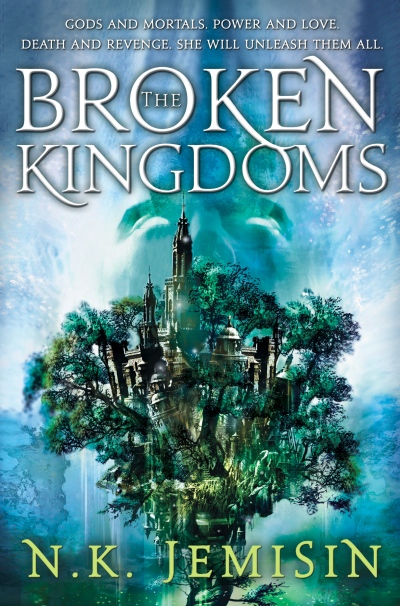
Review: The Broken Kingdoms by J. K. Jemisin

Summary: "In the city of Shadow, beneath the World Tree, alleyways shimmer with magic and godlings live hidden among mortalkind. Oree Shoth, a blind artist, takes in a strange homeless man on an impulse. This act of kindness engulfs Oree in a nightmarish conspiracy. Someone, somehow, is murdering godlings, leaving their desecrated bodies all over the city. And Oree's guest is at the heart of it. . ."

My interest in the story fluctuated.  I found Oree complex but overall a boring character. The world of Shadow, however, was interesting. The way magic worked for mortals and the social structure of the city, Shadow, helped make up for my disinterest in other parts of the book. It became obvious who was behind the intrigue and why so I wasn't reading to see what happened.

What kept me coming back to the book was Jemisin's writing style. I love the way she describes the world and action scenes. Sometimes I find many writers have difficulty writing concise action scenes that are easy to picture but Jemisin's action scenes were great. The chapters are titled like paintings and we are told with what materials the "painting" is  made. Along with Oree being an painter, the chapter titles gave the book an artistic feel. I liked trying to figure out what the chapter would be about based on the titles.

The Broken Kingdoms continues where the first book, The Hundred Thousand Kingdoms, left off but does so through mostly new characters. Only a few from the first book made brief appearances. I found the first book to be very heavy on the romance while The Broken Kingdoms focused much more on the "the story."

I'm not sure if I'll read the final book in The Inheritance Trilogy when it comes out. I felt like the story ended with this book but I may read the last just to see it through. I  do suggest reading the first book and not jumping ahead. It will make much more sense who this "homeless man" is and why he acts the way he does if you've read book one. This text counts towards the PoC Reading Challenge!


Publisher: Orbit, 2010     Pages: 416
Rating: 3 Stars     Source: Public Library

Monday, June 13, 2011

Review: Harry Potter and the Sorcerer's Stone by J. K. Rowling

Finally, I've read Harry Potter! Wow, what great characters! I loved Hagrid, the giant "gamekeeper," who befriends Harry and sees him through his first year at the wizards' school, Hogwarts. Harry's story as "the boy who lived" is so endearing yet sometimes I found him dry... that is, until he meets Ron and Hermione and they get into some close calls while tracking mysterious happenings at the school. Need a plot summery? Click here.

The interactions between characters felt so real and there was some great dialogue. Despite the fact that they have magical abilities, it felt like I was reading about otherwise normal kids who worry about wearing hand-me-downs and meeting expectations. The professors were equally as interesting. I liked never knowing what to think about professor Snape - is he good, bad? Don't tell me! I want to read the books without spoilers!

The Hogwarts world is very creative with it's own candy, newspaper and sport, quidditch. Reading about the quidditch tournaments was a little boring for me but they worked into the plot of the story so well that I was soon happily reading again. I enjoyed the academic environment of Hogwarts and got a chuckle out of the library scenes with magical books and a very old-fashioned librarian guarding them.

There were a few dark moments (that unicorn scene, ick!) but that's the nature of fantasy. In order to have an epic tale of good vs. evil there must be dark moments. I didn't find the dark parts too overwhelming for young readers.

I'm glad I made time for Harry Potter. I'll slowly make my way through the series. Has anyone listened to them on CD? Are they any good?

Publisher: Scholastic, 2008     Pages: 330
Stars: 4                                          Source: Public Library

Tuesday, June 7, 2011

Review: Coraline by Neil Gaiman

Coraline goes exploring in her new house where she finds a door that opens to a brick wall. Little does Coraline know that she's opened a portal to a strange and eerily similar world. When the bricks disappear, Coraline steps through the door to find a house identical to her own but with fantastic toys and wonderful food. But there is another mother and father and the "other mother" intends to trap Coraline forever.

Gaiman's writing was fantastic. I kept thinking this guy can write. The story reminded me a lot of Alice in Wonderland -- there was even a snobbish cat. While I enjoyed Coraline it did not evoke much of a response from me; however, I think kids who enjoy fairy tales and those who like Alice's Adventures in Wonderland will appreciate this book. There is a movie out, too, which I plan to watch. I think it looks good. Have your read or watched Coraline?

Publisher: Boomsbury, 2002     Pages: 176
Rating: 3 Stars     Source: Public Library

Sunday, May 29, 2011

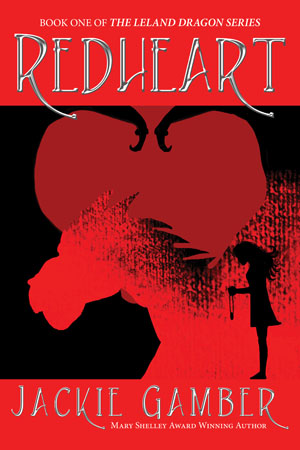
Review: Redheart by Jackie Gamber

Redheart is an adventure story for fantasy readers who enjoy foreign lands and mythical creatures. It’s a soaring tale about outsiders who find friendship in each other. I enjoyed how several characters are connected in ways they are unaware but must figure out. It added a bit of mystery. My favorite characters were Kallon and the dragon hunter who must learn to work together even though they hate each other.

Summary: “Kallon Redheart lives with his back turned on his fellow dragons, on humans, and on everything he once understood. Riza Diantus is a young woman with dreams too wide to fit inside her village fence. Their unexpected friendship is risky in Leland Province, where drought has stripped the land and superstition has cowed its people. And the danger only grows. Fordon Blackclaw, Dragon Council Leader, resents Leland's time-worn venur system. He has inflamed tensions between dragons and humans to the brink of war. He wants to trample humans into utter submission, or wipe them off the face of the land. Anger erupts, scorching innocent lives in its path. When Riza is threatened, Kallon is the only one with the power to save her. But first, he must confront his past and the future he stopped believing in. He must claim his destiny." 

Much of the story is revealed through characters’ verbal interactions. While characters must interact I wished the third-person narrator would have narrated more of the story to keep the plot moving. This is probably just my reading preference, though. The age of the characters was a bit ambiguous but to me they all felt like adults. While some parts, like the dragon interactions, felt like a young adult novel, others, like Riza's interactions with the much older dragon hunter (though rather innocent), felt out of place. So, I had trouble determining what age range this book is for.

Redheart is the first in a series yet stands well on its own as a single read. If you’re looking for an adventure story or know someone who loves reading about dragons and magical kingdoms Redheart may be what you’re looking for.

Publisher: Seventh Star Press, LLC., 2011     Pages: 294
Rating: 2.5 Stars     Source: Free from publisher. Thanks, Seventh Star!

Saturday, May 21, 2011

Review: The Dead-Tossed Waves by Carrie Ryan

If you've hung around The Prairie Library for awhile you know I'm a fan of dystopias. I really enjoyed Ryan's The Forrest of Hands and Teeth for it's bizarre society...and of course the zombies were perfectly creepy. I didn't mind the obligatory romance either. The characters were well-rounded...yada, yada. I loved it.

The companion novel, The Dead-Tossed Waves, picks up several years after Mary's escape from the zombie infested forest. Gabrielle, Mary's daughter, lives in Vista, a walled-off sea city. Gabrielle is not like Mary. She spends much of the novel wishing things had been different, indulging in "if only"s. This was rather off-putting for me. Unlike Mary, who was always looking towards the future, Gabrielle is stuck in the past. It felt like I was reading the same lines over and over again -- things like "only yesterday things were better" or "a week ago so-and-so kissed me and life was good" -- and it really got plain-old-fashioned boring. The dystopian part, which is what I was reading for, was barely there. I wished more focus was given to Vista and its social dynamics. I felt like I didn't know the town.

Zombies strike (but not often enough), people fall in (and out) of love, (not so mysterious) mysteries and twists abound. And Gabrielle just didn't cut it for me. She was a little too damsel-in-distress.

That's the truth, how I really felt when I was reading the novel. I do suggest reading the first novel, The Forrest of Hands and Teeth, if you enjoy dystopias or zombies. Since The Dead-Tossed Waves is a companion novel, and not a sequel, you needn't worry about having to read the "next" book. What about you all? Did you like The Dead-Tossed Waves?

Publisher: Delcorte, 2010     Pages: 416
Rating: 2.5 Stars     Source: Public Library

Tuesday, January 4, 2011

Review: Mistwood by Leah Cypess

Mistwood was a fast read as many young adult books are. I enjoy their generally quick pace. However, I’ve noticed that such a focus on plot, keeping the story swiftly moving, can make it difficult to leave room for deep character development. This is one book I really would have liked more character development, especially with the secondary characters like the wizard and the princess. I think these characters were interesting and if more time had been given to them they could have added richness to the story. There were a few moments when Cypess uses the dialog or a character’s gestures to bring the characters to life. These were great moments and made reading the book fun. I wanted more of those moments and less flat description.

The point of view is third person and shifted continuously to look at different characters. Several paragraphs would be
Summary: "The Shifter is an immortal creature bound by an ancient spell to protect the kings of Samorna. When the realm is peaceful, she retreats to the Mistwood. But when she is needed she always comes.

Isabel remembers nothing. Nothing before the prince rode into her forest to take her back to the castle. Nothing about who she is supposed to be, or the powers she is supposed to have."
written from Isabel’s perspective –what she was thinking and feeling – then a couple paragraphs from Prince Roken’s, then quickly a few paragraphs from yet another character’s viewpoint. It gave the book a choppy feel. Since Mistwood is all about the Shifter, who and what she is, I think the book would have been stronger with Isabel as a first person narrator.

Isabel’s indecision about which prince to support lasted longer than I would have liked. There were several lines which felt like repeat as she sorted out her emotions and conflicted feelings. I could have done without that much deliberation. And I was somewhat confused by her ultimate decision. I saw it coming – the romantic suggestions being too heavy to leave much doubt – but I was still surprised by the way things concluded. But it was a crazy situation Cypess created for Isabel to figure out.

I liked the story’s ability to surprise me. The political intrigue was fun to follow as the Shifter searched for the truth in the mist surrounding the castle. I like “legends” and the myths about the Shifter were fun. I wish the legends had been explored deeper since they were important to the story. I liked Mistwood but it kept me wanting more – more character, more legend, more imagery. There’s a good beginning here and I have hopes the next book will be even better. 

Publisher: Greenwillow Books, 2010     Pages: 304
Rating: 3 Stars     Source: I won this book from Arena at The Nerd’s Wife. Thanks!

Thursday, August 12, 2010

Review: The Lightning Thief by Rick Riordan

Who needs college when we have Rick Riordan to educate and entertain us?

My husband took a college course this summer called “Classical Mythology” and he kept coming home boring me to death with ancient stories of gods’ family abuses, murders and intrigues. I took a course awhile back in which we read Homer’s The Odyssey, The Oresteian Trilogy by Aeschylus (great plays, btw), and three plays by Euripides (which I also enjoyed). I even “stared” as the evil Medea in a classroom performance (in which my American Girl dolls, Samantha and Molly, played my dead babies. I dressed them in “togas” from pillow cases).

While the original Greek stories are full of drama, drama, drama The Lightning Thief offers a lighter approach to classical myths. While not a parody, The Lightning Thief was actually pretty funny.

I enjoyed Percy’s point of view as a 13-yr-old struggling with ADHD and dyslexia who finds out he’s a demigod – a child with one mortal and one immortal parent. He winds up at Camp Half-Blood (for demigods) to find himself in the middle of a family feud between the gods on Olympus. He accepts a dangerous quest to put things straight and to clear his name of theft.

Along his journey, that spans the continental United States, Percy encounters several mythological characters including Medusa (avert your eyes!), Ares (god of war), Hades (god of the Underworld) and my favorite scene of the book was with Procrustes (“The Stretcher”). Riordan brings these ancient characters into the 21st century in surprisingly clever ways while remaining true to the gods’ traits. The Greek gods are known for acting selfishly, constantly making mistakes on a colossal scale, and they are still at it in Riordan’s book.

This is a great adventure story for kids while teaching them about mythology. Why bother with Greek mythology at all? Our own society, or “Western civilization,” borrows much from the ancient Greek. From language to architecture, story-telling to mathematics, philosophy on education to government, our shared “Western” culture has been built on the work of many Greek thinkers. These myths investigate human qualities they thought were important – human qualities taken to extremes by gods, heroes and anti-heroes in order to test, if only hypothetically through story-telling, humanity’s potential strengths and weaknesses. This is just one reason why Greek stories are so interesting and still relevant.

Riordan’s story offers the best of Greek mythology. It tells us enough about a myth without revealing the often sexual/brutal natures of these myths. The book mentions that gods have affairs with mortals and sometimes between the gods. This is as racy as the book gets. I don’t think it’s any shocker to kids these days that some adults have affairs or how they complicate life.

Percy thinks he’s just a “mistake” to his immortal father (I teared up when he thought this). Other “half-bloods” struggle fitting in with step-family members. I think children occasionally feel, if only for brief moments, that they don’t belong in their family. In this way, I think any kid can identify with Percy and his desire to find “family.”

Other themes in this book are friendship (I loved Grover!), trust, betrayal and self-confidence. All around, this was a fun read. I really enjoyed the mythology and the story was original and captivating. I recommend readers be at least 9 (the vocab may challenge them but shouldn’t hinder their reading pleasure. However, plot twists may throw them). Readers may wish to keep a “glossary” of Greek names since they can be hard to keep track of. I was surprised there wasn’t one in the book.
Publisher: Hyperion Books, 2005     Pages: 377     Source: Purchased from Amazon
Rating: 4.5 Stars     Recommended Age: 9 and up

Monday, July 26, 2010

Review and Giveaway: Sapphique by Catherine Fisher

Sapphique is the sequel to Incarceron (my review), an epic fantasy by Catherine Fisher. I read Incarceron a couple months ago and really enjoyed it and couldn’t wait to read more about Finn the cell-born, Claudia the proud aristocrat, Jared the wise, Keiro the “oath brother,” and Attia the “dog-slave” girl not to mention the plotting Warden and the conniving Queen of the Realm.

Things don’t look good for those trapped in the heinous intestines of the world’s largest prison. Will the Queen win and obliterate Incarceron, damning its inhabitant? Or will Incarceron triumph and take total control. Where is the Warden? Where are the Keys? Does Escape exist? Who is this legendary hero, Sapphique? Does Finn even know who he is? Will Keiro’s bravado help or make things worse? If you’ve read Incarceron you’re probably dying to know the answers.

The characters are well developed and I enjoyed getting to know them more. Without his oath-brother’s presence, Finn is given the chance to step-up and prove himself. It was interesting to watch his development from tortured soul to commanding heir.

Claudia matures as she learns to see life through others’ eyes. She understands more fully that ending Protocol, the enforced low-tech aristocratic society, will mean her fall from luxury.

A new figure makes an appearance in the prison, the Enchanter. His role threw me a little and here’s why: I enjoyed the rational, “scientific” explanations for how the prison works and for how the Realm is run. As with most science fiction, there are devices that do amazing things – time travel, space travel, etc. – and the reader just accepts that they work, ya know? And I could accept how gadgets work in Fisher’s books, too. But the Enchanter brings the element of magic. Is it real, are we supposed to believe it’s real?

Mild Spoiler Alert: The asterisks below signal a spoiler-free zone.

Especially at the end, the explanations and loose ends were tied up with magic. I felt this was a cop-out and wanted what I had come to expect, a more “scientific” explanation if you will, for all the answers.

****************************************************

Ultimately, Sapphique was entertaining and a must read if you’ve read the first book. It did take awhile for me to become interested in the story again. But about half way through I began tearing up the pages to find out what the heck was going to happen! There are enough twists to keep things interesting. If you liked Graceling or enjoy fantasy with a sci-fi feel to it you might like these books, too.
Publisher: Hodder Children’s Books, 2008 (UK version)     Pages: 470     Source: I won this book!
Rating: 3.5 Stars     Recommended Age: 12 and up
 
I'm giving Sapphique away to one lucky winner in the U.S. Click HERE to fill out an entry form!

Wednesday, July 21, 2010

Review: The Hundred Thousand Kingdoms by J.K. Jemisin

Looking for a page turner? Look no further. The Hundred Thousand Kingdoms by N.K. Jemisin is a fantasy novel that pulled me in to its strange world and had me returning as often as I could spare a minute to pick up the book.

Summary from Shelfari:
Yeine Darr is an outcast from the barbarian north. But when her mother dies under mysterious circumstances, she is summoned to the majestic city of Sky. There, to her shock, Yeine is named an heiress to the king. But the throne of the Hundred Thousand Kingdoms is not easily won, and Yeine is thrust into a vicious power struggle with a pair of cousins she never knew she had. As she fights for her life, she draws ever closer to the secrets of her mother's death and her family's bloody history. With the fate of the world hanging in the balance, Yeine will learn how perilous it can be when love and hate - and gods and mortals - are bound inseparably together.

The title of the book is somewhat misleading, in my opinion. I thought this story would be an epic, a story that traversed a vast kingdom. But the majority of the action takes place in the castle-city of Sky. So, I was disappointed in this respect.

The beginning was set up well. The politics and intrigues of the royal family are quickly reveled as are the gods trapped in mortal bodies who are at odds with the royalty. I thought that this conflict between the royalty and the gods was the main point to the story. While it is important, the plot actually turned into a romance between Yeine and the dark lord, Nahadoth. I don’t mind political intrigues with a little romance but this story was a romance with a little political intrigue. The romance between Yeine and Nahadoth was interesting with his split personality, but the romance was overdone for my taste, particularly because I wanted more of the original plot and kept waiting for the epic to begin.

The story is told in first person by Yeine and it is Yeine’s personality, strong and inquisitive, along with Jemisin’s writing ability, which kept me turning pages. I wanted to see Yeine solve the mystery about her family and was never sure how things were going to play out. I appreciated the humor which offered the right amount of comic relief.

The relationships between the gods were more than a little weird. Jemisin draws from many myths about gods to bring hers into creation. While most of the gods’ back story was interesting there are some parts about their sexuality that the reader is supposed to accept as normal for the immortals that was just disgusting. This is not a focus of the novel but I don’t understand what purpose mentioning these relationships served. I think mentioning the sexual relationships between family members could have been left out. It certainly didn’t make me want to see Yeine hook up with one of them.

While reading I kept making comparison to Stephanie Meyer’s sci-fi novel The Host. Both novels explore the idea of having two personalities within oneself or being inhabited by another entity or personality. They explore the ideas of one’s conscious and subconscious and what makes a person’s identity. They look at how we go about choosing what kind of person we want to be. I wasn’t a big fan of The Host and think Jemisin’s writing is way better but, if you liked The Host, you may appreciate The Hundred Thousand Kingdoms.

If you’re looking for a fast read, a romance or a new look at mythology this novel might be for you. I enjoyed the pacing that kept things escalating right up to the end. Some of the answers I saw coming, some I didn’t. While this is the first book of a trilogy I felt The Hundred Thousand Kingdoms stands well on its own. Overall, I liked this book but could have done with less romance and more action and adventure.
Publisher: Orbit, 2010     Pages: 228     Source: IC Public Library
Rating: 3 Stars     Recommended Age: adult

Wednesday, July 14, 2010

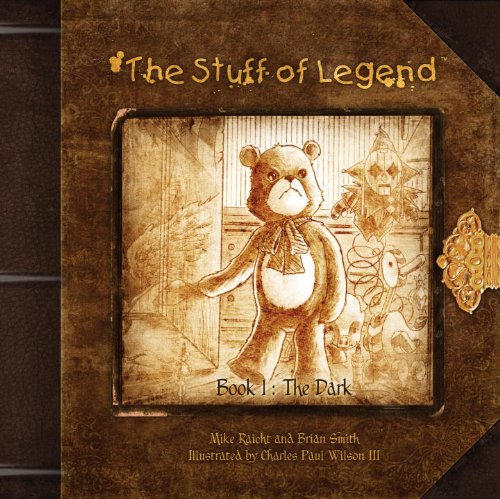
The Stuff of Legend, Book 1: The Dark - A Graphic Novel Review

In many ways The Stuff of Legend, Book One: Into the Dark, written my Mike Raicht and Brian Smith, Illustrated by Charles and Paul Wilson III,  reminds me of a fairy tale. Its pages are dark, dangerous and strangely pleasant. This is a story about a band of toys on a rescue mission to save “the boy,” their friend and master, from the Boogeyman, Lord of The Dark. Where the boy has been taken we do not know. We only know his toys and puppy, led by the Colonel, are desperate to save him.

The Boogeyman is scary. When I was very little I was sure there was something sinister hiding in the shadows beneath my bed. I would get a running start and leap into my bed so that there was no way I could be snatched by an arm from under my box springs. The opening pages perfectly capture that horrifying feeling I had for a split second whilst sailing through the air before hitting my pillow – that terrifying feeling that something was about to drag me under. One of my favorite frames is drawn from the boy’s perspective. We see the boy’s hands stretched out towards Maxwell, the teddy bear lying helpless in his frozen state, watching as the boy is dragged off by the Boogeyman. Can you imagine watching someone you love being abducted while you are unable to move or speak? The boy’s kidnapping is a heavy blow to Maxwell.

The sepia tone leant a serious feel to the book which worked well considering the book’s themes. Each character was vital to the story, adding something important to each other’s characterization. The “natural” representation of each toy was just what I thought they’d be like. I actually enjoyed the way book one dropped off. I don’t want to give much away but I thought it was clever.

There are many themes in this graphic novel: war, friendship and loyalty stand out the strongest. The toys’ resolve is tested as they face foes from within and without their party. Worst of all, they can’t seem to find out anything about the boy. I found this to be the most frustrating part of the story. As much as I enjoyed the toys’ adventures, I wanted to know more about why the boy was taken in the first place. Perhaps unanswered questions are customary with comic books but I felt this first installment, especially as a graphic novel, would have been stronger with more information here. However, I thoroughly enjoyed The Dark and want to read the next book.

What do you think of the cover? Doesn’t Maxwell’s face epitomize determination? I love it.
Publisher: Villard, 2010     Pages: 128     Source: Purchased on Amazon
Rating: 4 Stars     Recommended Age: 12 and up (There's a few pictures very young children might find too scary.)

Thursday, July 8, 2010

Review: Catching Fire by Suzanne Collins

Catching Fire, book two in The Hunger Games trilogy, captured my attention right away and I was gripped by the story for the entire read. A couple times I had to put the book down for a second, look up at my husband and gasp “No way!” to which he looked at me confused and then I went back to reading. This is a seriously entertaining series. If you haven’t begun The Hunger Games yet, you really need to.

Katniss and Peeta survived the brutal Hunger Games only to become unwitting symbols of resistance to the Capitol. The Districts have become increasingly disgruntled by the Capitol’s abuses. And Katniss’ refusal to be a pawn in the arena has sparked a fire that neither she nor Peeta can control. The Capitol hits hard in retaliation in an attempt to control “the girl on fire.” My reivew of the first book can be found here.

The characters developed nicely in the sequel. I liked getting to know more about Haymitch, District Twelve’s only other survivor/victor of the Games and Katniss and Peeta’s mentor. We really get to see why he has turned to alcohol and also, why he has learned to care so much about Katniss and Peeta and vice versa. We get to see Katniss’ mother more as she springs to action (remember she was mostly depressed and defunct in the first book). I liked seeing the mother daughter relationship being healed. And we see more of Gale’s family so, even while Gale is often absent, we learn more about him through his family.

There’s just as much action and adventure in book two. Things get violent as the Capitol closes in. You can feel the stress riddling the characters. It’s only a matter of time before the spark turns into a fire. As usual, I enjoyed Katniss’ strong personality. She deals with events as best she can. She’s a little head-strong but that’s definitely a quality needed for survival.

The romance between Katniss and Peeta, a forced pretense on her part for survival and genuine on his part, becomes even more complicated. How should she feel about the boy responsible for saving her life? But then there’s her best friend Gale? Oh, dear. I’m not sure yet, but I think I’m voting for Peeta. I reserve the right to change my mind. Lol. The romance is still rather innocent but they do get close and kiss often for the cameras. My slight concern for young readers is Katniss’ melt-down when she gets drunk one night. It’s not something she’s proud of and doesn’t happen again. But adults may want to mention that Katniss’ behavior here is not normal and that alcohol didn’t help her at all to solve her problems. This is a very small incident in the book and I wouldn’t let it stop adults from letting kids read it.

The writing is written with the same POV as the book one – in first person, present tense from Katniss’ perspective. As with the first book, it took be a few pages before I adjusted to the writing style but it was less of a problem for me in book two. Overall, I think Collins is a great young adult writer. I can’t wait for Mockingjay’s release in August!
Publisher: Scholastic, 2009     Pages: 400     Source: U of Iowa Libraries
Rating: 5 Stars     Recommended Age: 13 and up